13 Studio Apartment Living Room Ideas for Small Spaces
These studio apartment living room ideas solve the hardest problem in small-space living: making one open room feel like a proper living room. In a studio, the living room is never a separate space. It shares walls, light, and air with the bed, the kitchen, and sometimes the front door. That is the challenge, and it is also the opportunity, because every choice you make in the living zone sets the tone for the whole apartment.
A studio living room works harder than any other room in any other home. It is where you relax after work, host friends on weekends, answer emails on Monday morning, and stream movies at night. The thirteen ideas below are built for that reality. They cover zoning, furniture scale, storage, light, and the small styling moves that make a studio feel deliberate instead of improvised. Whether your studio is 250 or 500 square feet, these are the moves that turn the main room into a place you genuinely want to spend your evenings.
1. Let the Sofa Divide the Room
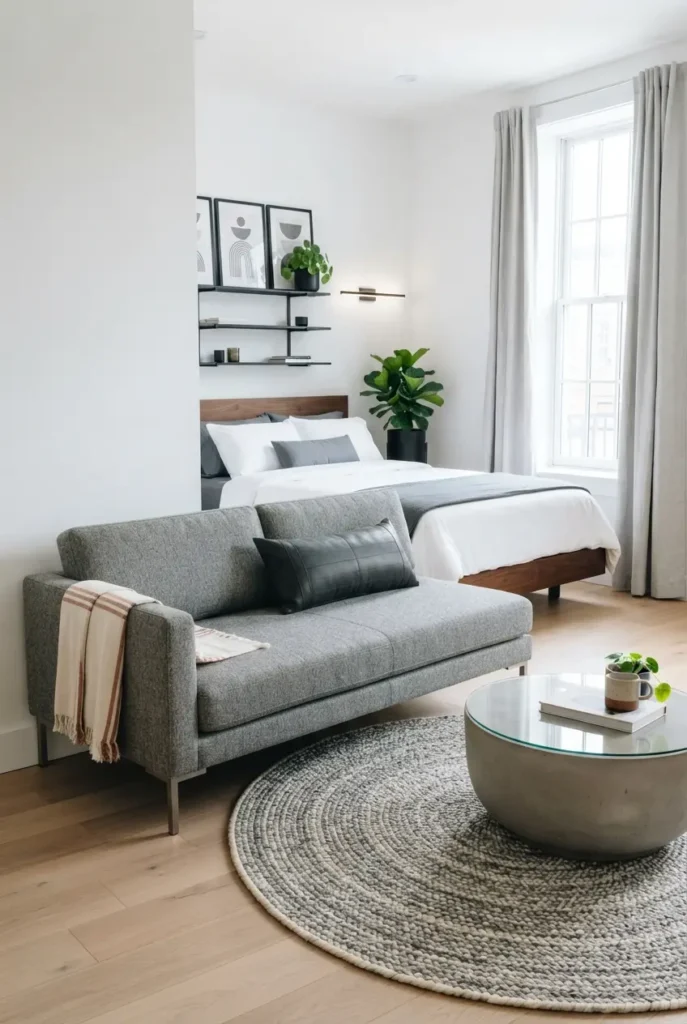
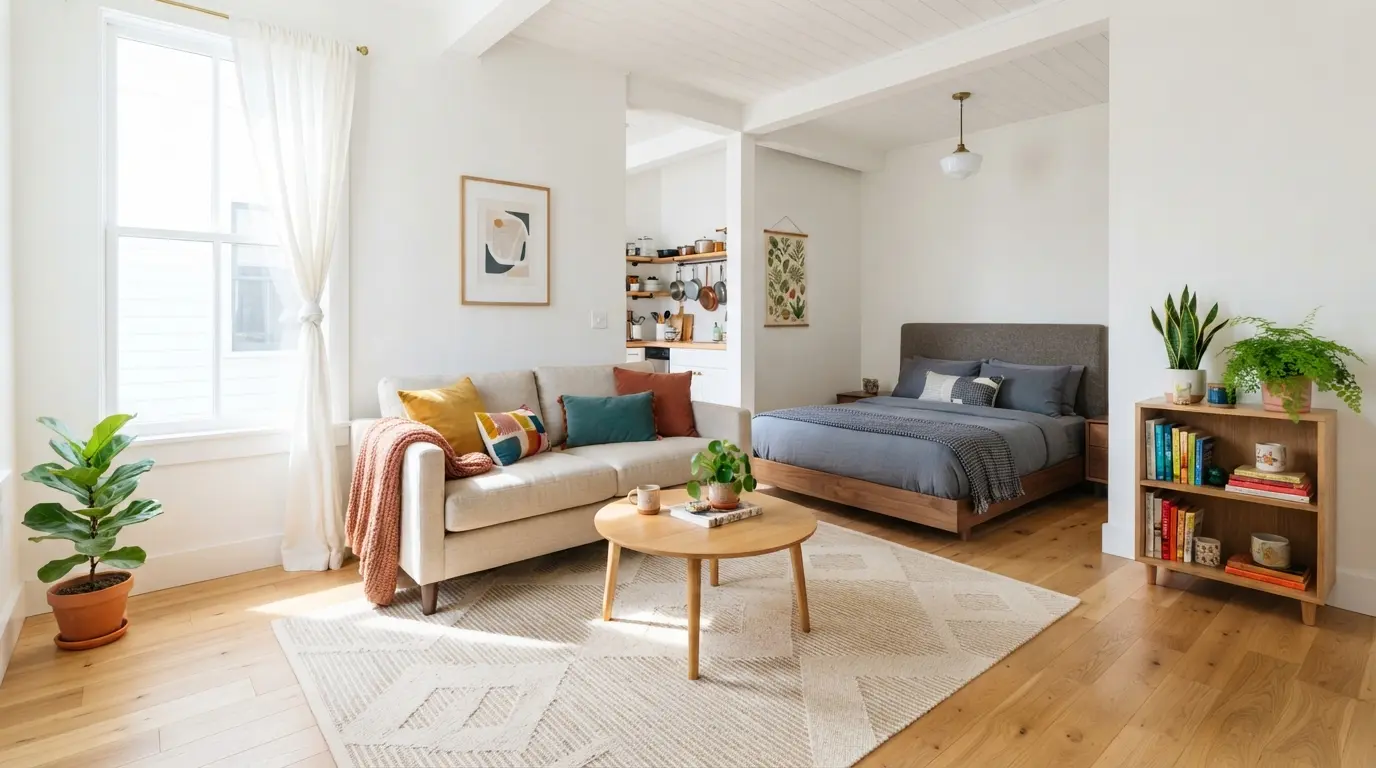
In a studio, the sofa is not just seating. It is architecture. Placed with its back to the sleeping area, a sofa draws the clearest line in the apartment: this side is for living, that side is for sleeping. No wall, no curtain, no renovation needed. Our 200 sq ft studio apartment layout guide uses the same trick, and it works in any square footage.
Choose a sofa with a finished back, since you will see it from the bed every morning. A low-profile design keeps sightlines open so the room still reads as one connected space. Leave a few inches of walkway behind it so the bed zone stays reachable without climbing over cushions.
Pro Tip: The 30-Inch Walkway
Keep at least 30 inches of clear walkway between the sofa and the next zone. In a studio, pinched pathways make the whole apartment feel cramped, while generous ones make it feel planned.
2. Studio Apartment Living Room Ideas Start With the Rug

A rug is the cheapest room divider you will ever buy. In an open studio, the rug tells your eye where the living room begins and ends. Without one, furniture floats and the whole space blurs together. With one, you have a room. Size it generously. The front legs of the sofa and chairs should all sit on the rug, which usually means going bigger than feels safe. A too-small rug chops the room into pieces, while a large one pulls everything together and actually makes the space feel wider.
Pro Tip: Rug Sizing Math
Measure your seating group, then add 12 inches on every side. That is your minimum rug size. In most studios, this lands you at 5×7 or 6×9 feet.
3. Pick a Loveseat, Not a Full Sofa

A standard three-seat sofa eats a studio living room alive. A loveseat seats two comfortably, leaves breathing room on both sides, and costs less. In a studio, that saved foot and a half becomes a side table, a plant, or simply empty floor, and empty floor is luxury. If you host often, our best couches for studio apartments guide covers sleeper options so guests still get a real bed. Scale is the whole game in a studio, and the loveseat is the right-sized player.
4. Two Small Chairs Beat One Big Couch
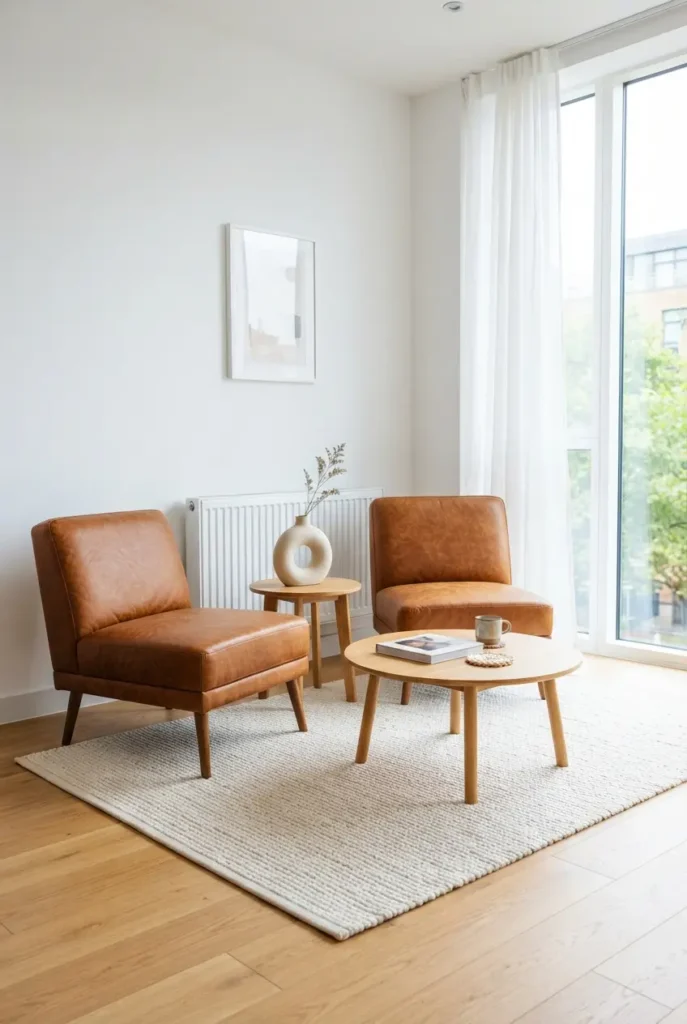
Two accent chairs do something one couch cannot: they flex. Angle them toward the sofa for movie night, swing one toward the window for reading, push both aside for a workout. In a studio, furniture that cannot move is furniture that gets in the way. Choose chairs with visible legs and open sides. Armless or low-arm designs keep the sightline clear across the room, which matters more than padding when every inch counts. A pair of well-chosen chairs looks intentional in a way a single oversized couch never will.
5. A Coffee Table That Holds Everything
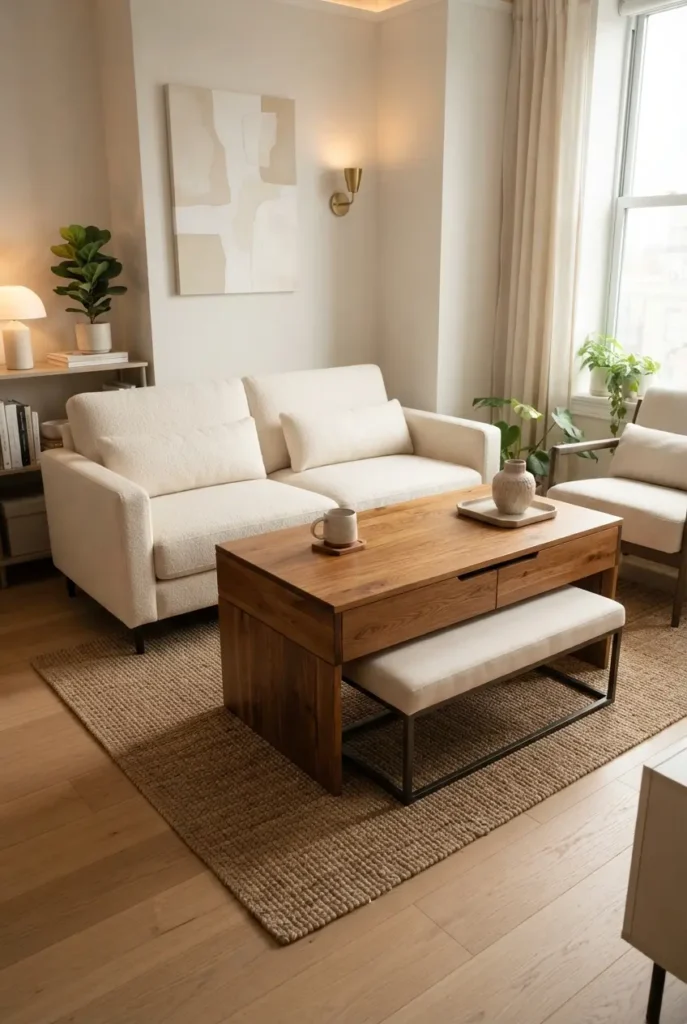
The coffee table is the hardest-working surface in a studio living room, so make it hold more than coffee. A lift-top table hides laptops, chargers, and remotes, then rises to desk height for work-from-home days. Storage ottomans and hollow benches do the same job with softer edges. Whatever you choose, keep the top styled light: one tray, one small object, clear space. In a studio, the coffee table is always in view, so its surface is part of the room’s visual calm. For more pieces engineered to vanish, our space-saving furniture ideas take the same philosophy further.
Pro Tip: Table Height Rule
Match your coffee table height to within two inches of your sofa seat height. It looks right, reaches easily, and keeps the proportions calm in a small room.
6. Mount the TV and Skip the Console
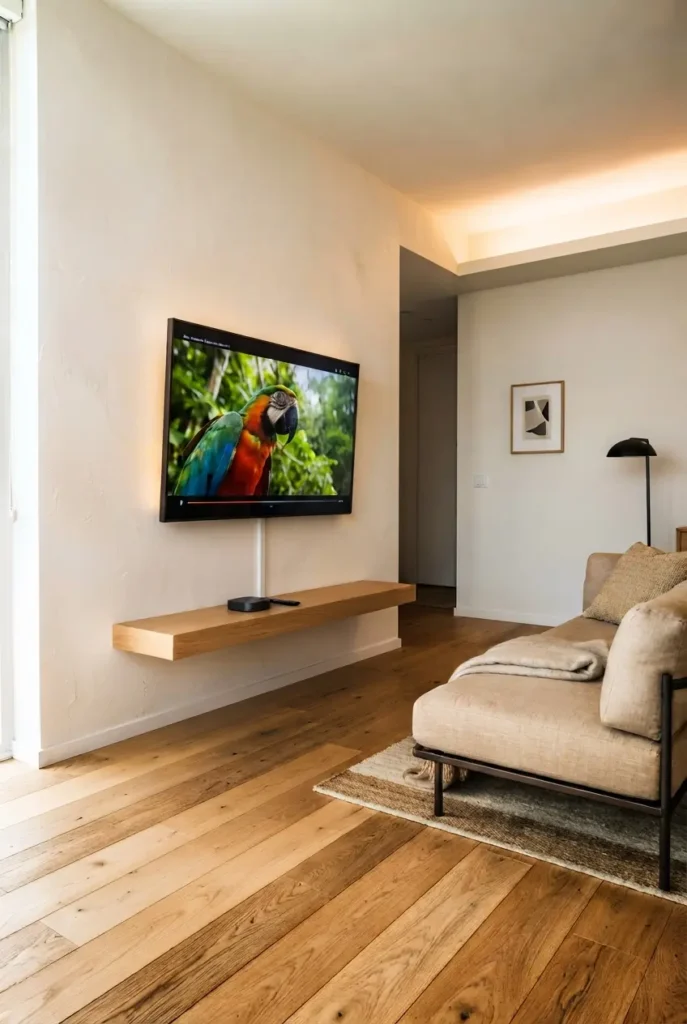
A media console is a big box that does one job. A wall-mounted TV does the same job with zero floor space. In a studio living room, reclaiming those four square feet matters, and the floating look keeps the wall feeling light. Run the cables through a simple cord cover painted to match the wall, and add one slim floating shelf below for the streaming box and a small plant. Everything the console did, done in six inches of depth. Angle the TV slightly toward the seating so movie night still feels right.
7. Go Up the Walls With Shelving
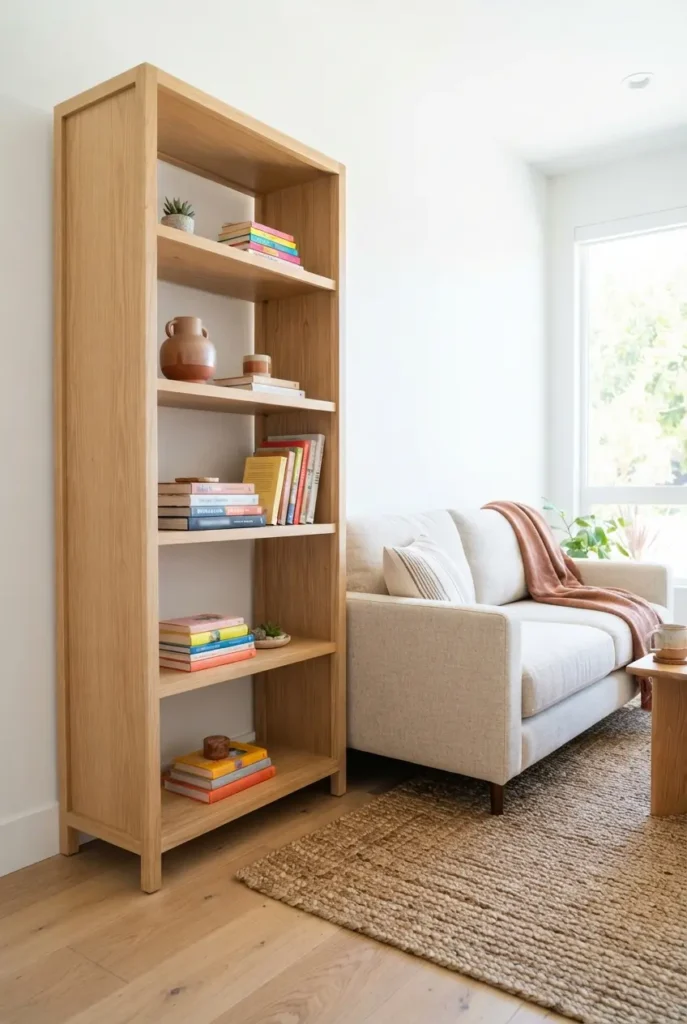
Floor space is fixed, but wall space is free. A tall shelving unit beside the sofa holds books, games, and decor that would otherwise colonize every surface. In a studio, vertical storage is the difference between a calm room and a cluttered one. Style shelves with breathing room: group books in small stacks, leave some shelves half empty, mix one decorative object per shelf. Our studio apartment organization ideas cover the full method, but the principle is simple. Shelves that breathe make the room breathe.
8. Studio Apartment Living Room Ideas for Light: Mirror the Window
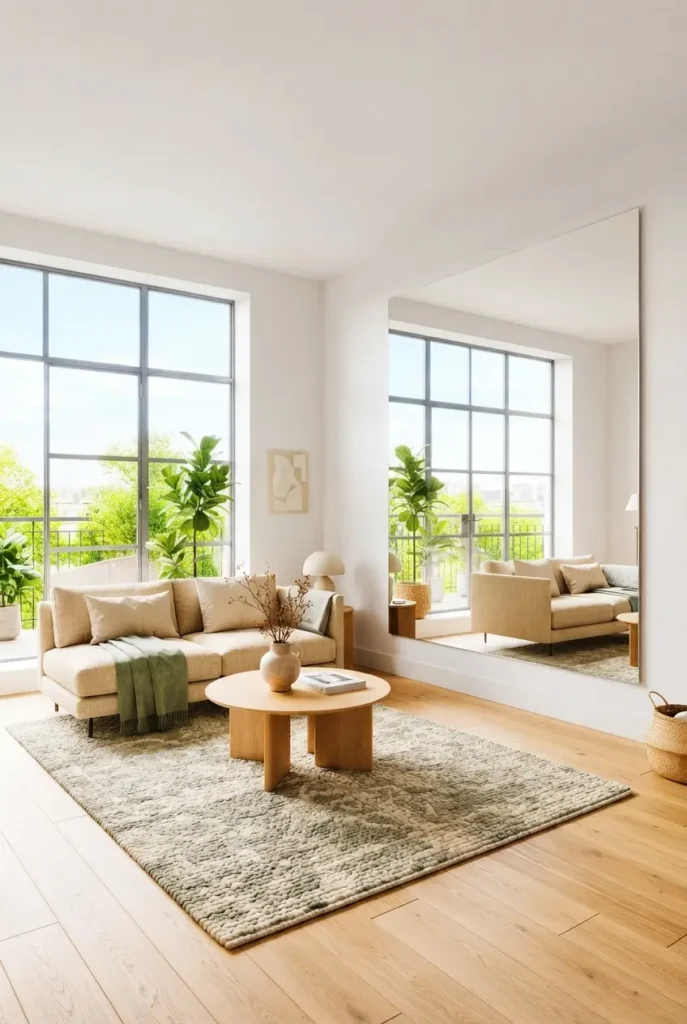
Hang the largest mirror you can fit directly opposite the window, and the living room gains a second window. Daylight bounces across the room instead of dying at the glass, and the reflection doubles the sense of space. It is the cheapest renovation in this entire list. Keep the frame simple so the mirror reads as architecture, not decoration. And keep what it reflects tidy, since a mirror doubles the visible clutter along with the light. One large mirror beats three small ones every time.
9. Light It in Layers

Overhead lighting alone makes a studio living room feel like an office. Layer three kinds instead: a floor lamp arcing over the reading chair, a small table lamp for warm pools of light, and one accent like LED strips behind the shelving. Each layer has a job, and together they make the room feel designed. Use warm bulbs everywhere, around 2700K. Cool white light flattens a small room and makes it feel clinical, while warm light makes the same square footage feel intimate. In a studio, lighting does the emotional work that square footage cannot.
Pro Tip: The 2700K Rule
Check the bulb box before you buy. Anything labeled daylight or cool white (4000K and up) will fight your cozy styling. Warm white at 2700K is the studio standard.
10. Carve the Bedroom Out With a Divider
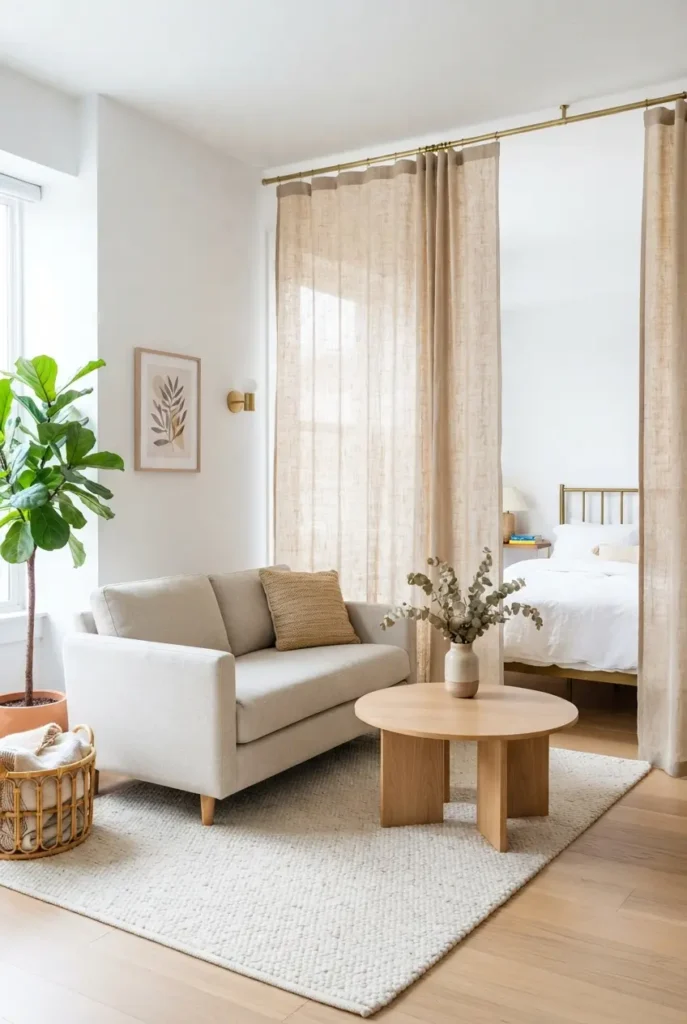
The living room only feels like a living room when the bed is not staring at you. A divider between sleeping and living zones changes everything. It does not need to be a wall: a curtain, an open bookshelf, or a folding screen all work, and renters can use every one of them. Our renter-friendly room divider ideas cover twelve options in detail, from ceiling-mounted curtains to bookcase walls. Pick the one that matches your light: open shelving keeps daylight flowing, while a curtain gives the deepest sense of separation.
11. Tuck a Workspace Into the Corner
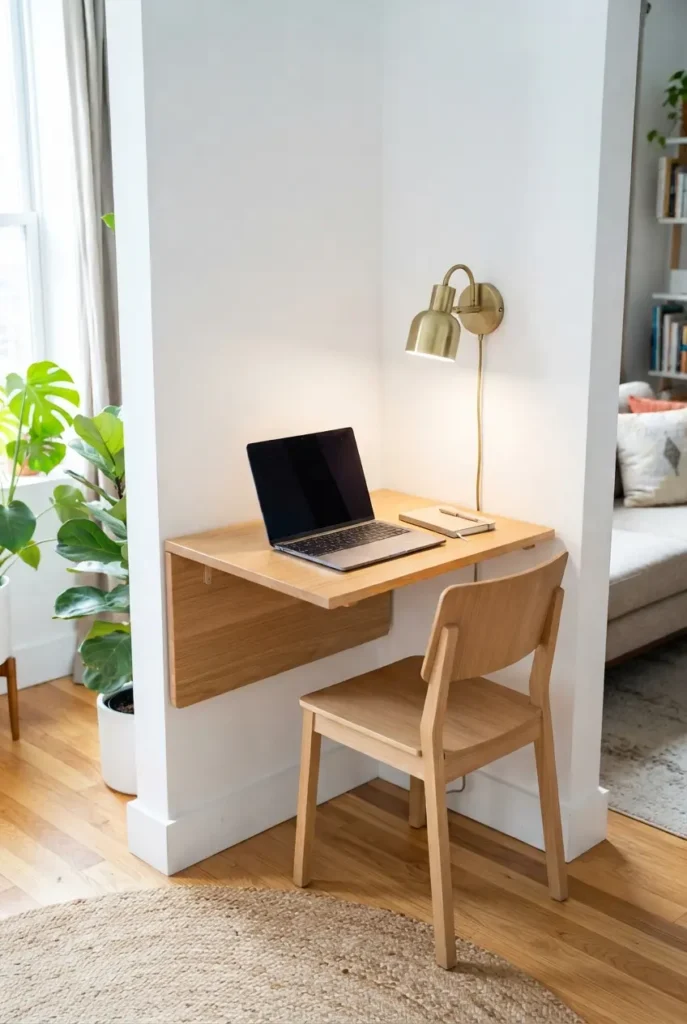
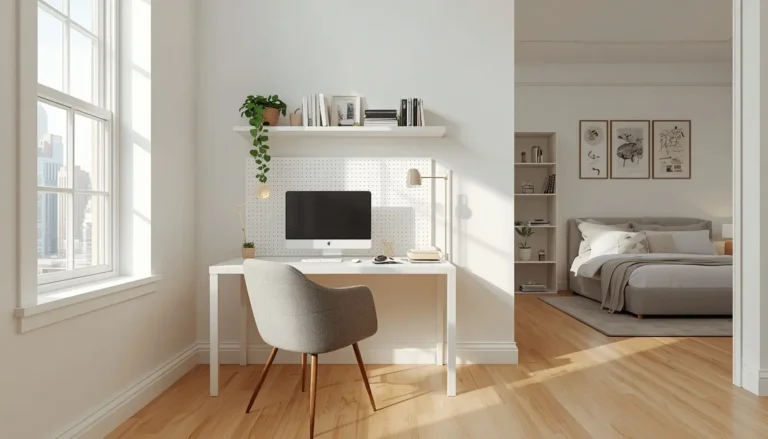
Remote work made the studio living room a home office too. The fix is a workspace that admits it is small: a wall-mounted drop-leaf desk, a slim console behind the sofa, or a corner nook with a floating shelf at desk height. It needs to hold a laptop and a notebook, nothing more. Face the desk toward the room, not the wall, so work hours feel connected to the living space. When the laptop closes, the corner should melt back into the room. A chair that slides fully under the desk keeps the floor clear after hours.
12. One Bold Accent, Everything Else Calm
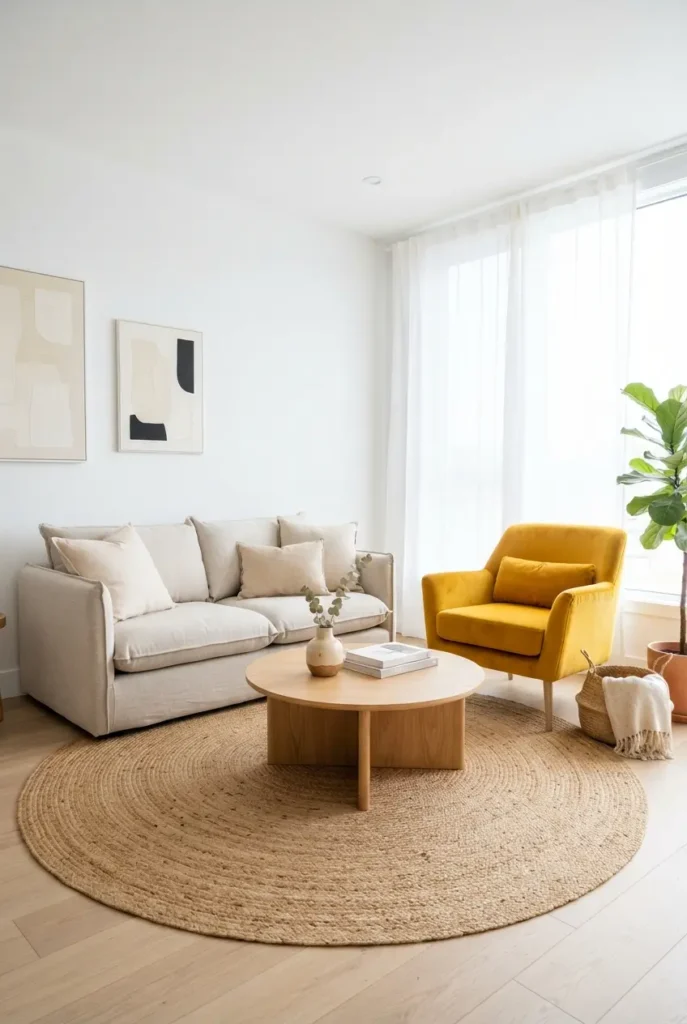
Here is the styling rule that holds the whole room together: keep the base calm and spend your boldness in exactly one place. White walls, neutral sofa, light wood, and then one mustard armchair, one terracotta rug, or one deep green velvet cushion. The single accent gives the room its personality without visual noise. This is also where color does its quiet work. Our studio apartment color schemes guide shows how one committed color lifts a whole room. In a studio living room, restraint everywhere plus confidence in one spot reads as designed, not decorated.
13. Hang Curtains High and Wide
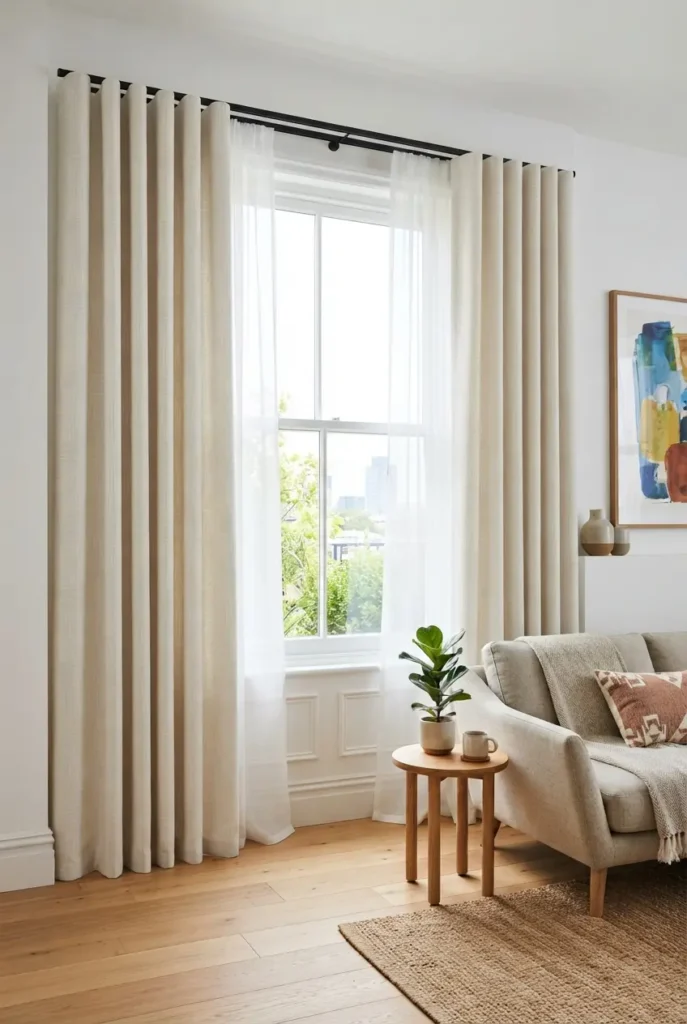
Short curtains hung at the window frame make the window look small and the ceiling feel low. Mount the rod four to six inches below the ceiling, extend it six to ten inches past the frame on each side, and let full-length curtains fall to the floor. The window suddenly looks twice its size, the ceiling reads taller, and the whole living room gains presence for the price of a rod and two panels. Match the curtains close to the wall color so they blend in and stretch the room, or choose one soft pattern as a quiet accent. Sheer panels work double duty: daytime privacy without losing a drop of brightness.
Studio Apartment Living Room Ideas: One Room, Done Right
These studio apartment living room ideas share one belief: a single open room can still feel like a proper living room when every choice is deliberate. Zone it with the sofa and the rug, scale the furniture to the space, hide storage inside the pieces, bounce the light around, and spend your boldness in one place. It is worth seeing how the pros approach the same challenge, like Apartment Therapy’s guide to making the most of a studio apartment, which covers these principles from another angle. Start with the rug, mount the TV, and remember: the best studio living rooms do not feel small. They feel exactly right.