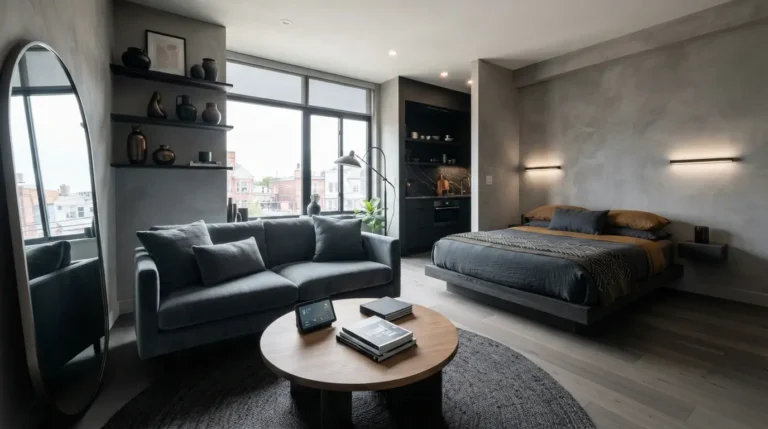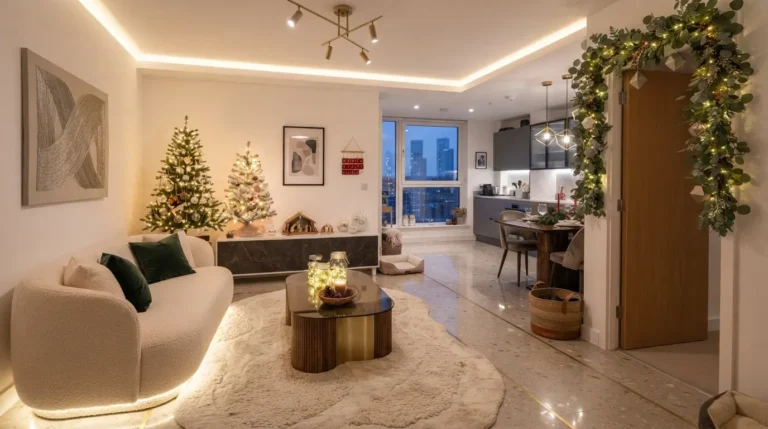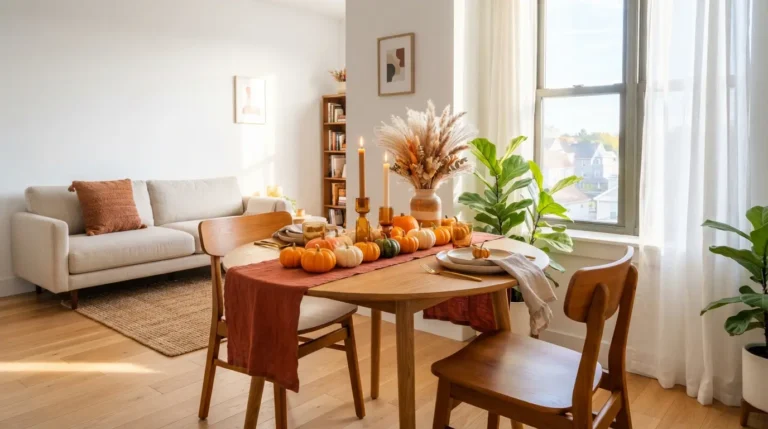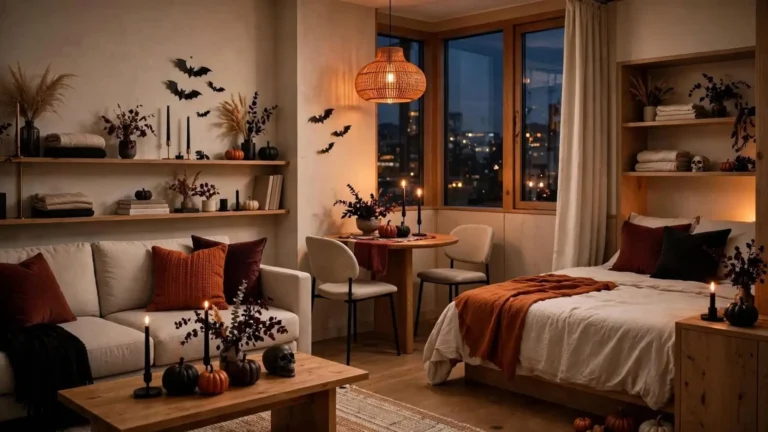
Studio Apartment Decorating Ideas That Make One Room Feel Finished
If you rent a studio, you already know the real problem. It is not that you own too little furniture. It is that even after you buy a bed, a sofa, and a desk, the room still reads as one big unfinished space. The bed is the first thing anyone sees from the door, and clutter is visible from every seat. These studio apartment decorating ideas fix that with placement, not permanent changes. By the end, you will have four clear zones, one repeat color palette, and one light per zone, with a clear walkway and a 10 minute checklist to confirm the room actually looks finished.
1. Map four zones on paper before you buy anything
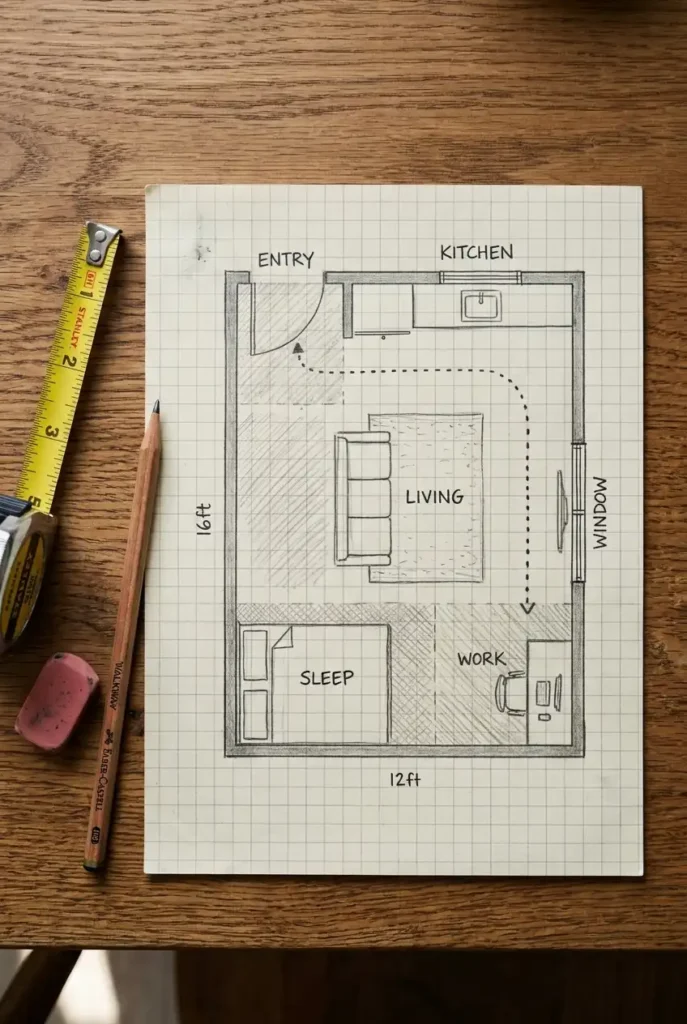
The first problem with most studios is that everything floats. Nothing has a clear edge, so nothing feels finished, no matter how nice each piece is on its own. Before you move a single box, walk through a normal day in your head. Write down where you sleep, where you sit and relax, where you eat or work, and where you enter and store your coat and bag. Then sketch the room on paper, marking the door, window, kitchen edge, and every outlet. Place your four zones on that sketch, and decide what you want to see first when you open the door. That becomes your focal point.
Keep a 30 to 36 inch clear path from the door to the window, and never let a zone cross it. This step costs nothing but paper and a tape measure. Skip buying a rug, sofa, or divider until the map is done, and do not push every piece to the walls, since that leaves a hollow, unfinished feeling in the middle of the room. For more on this step, see our full guide to studio apartment layout ideas.
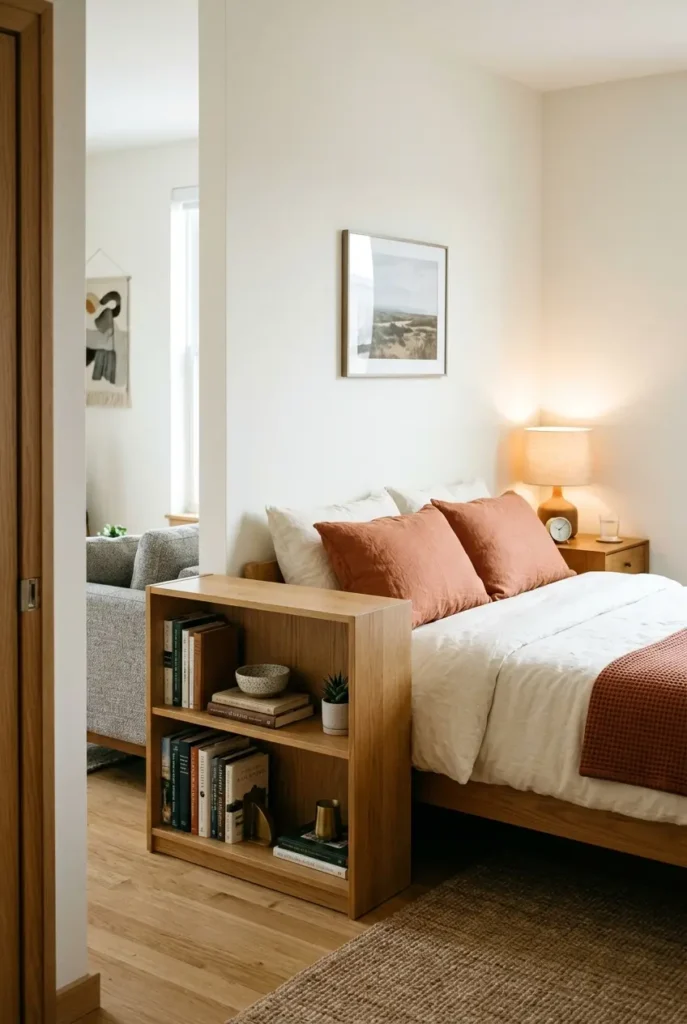
2. Give the bed a finished sleep zone without a wall
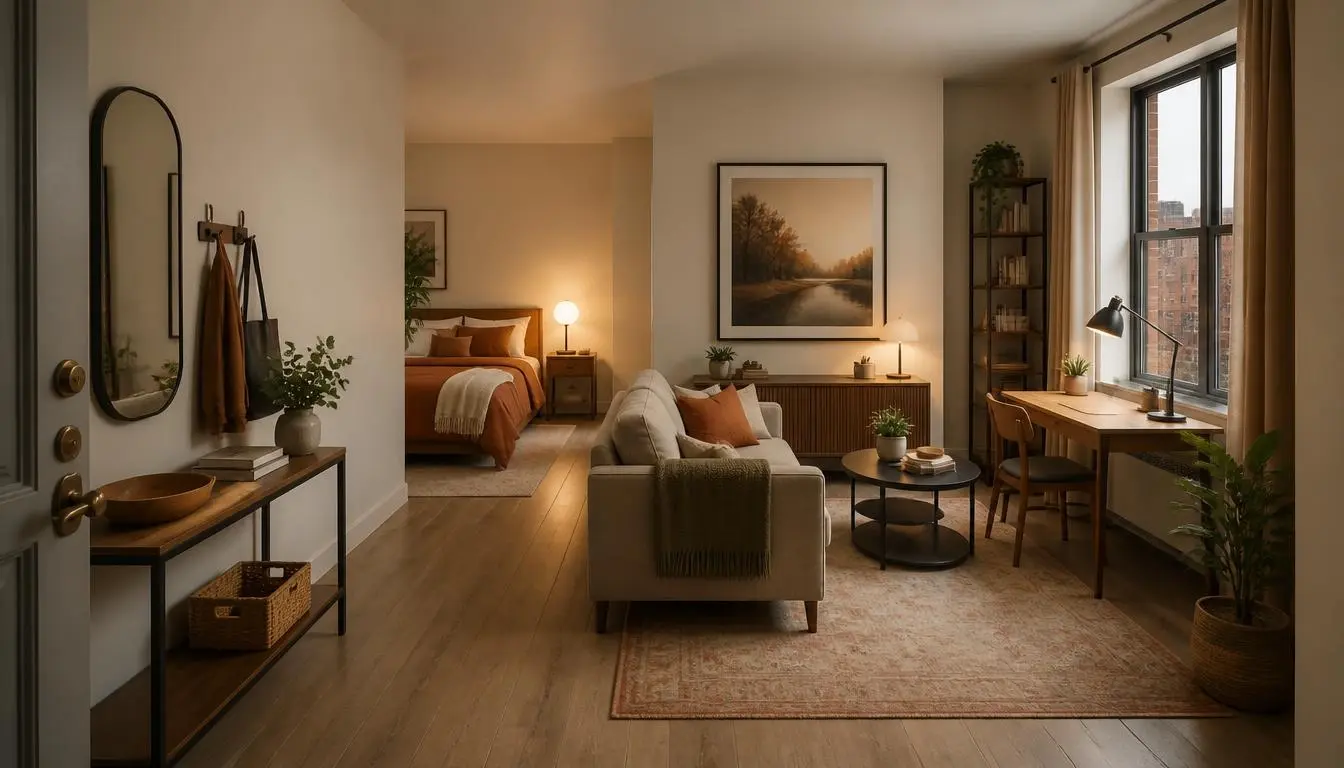
In most studios, guests see the bed the moment they walk in, and sleep never feels like its own space. Start by moving the bed to the quietest far corner, away from the door, if your layout allows it. Turn your sofa back toward the bed, or place a low open bookcase at the foot or side of the bed to mark the edge of the zone. Add one small bedside light so the corner has its own identity, and choose bedding in your repeat accent color so it reads as intentional, not leftover.
Keep any divider at or below bed height so light still travels across the room, and leave at least a 24 inch gap so you can still make the bed easily. A freestanding bookcase or a sofa back works without drilling. If you want a ceiling curtain, use a tension rod or a landlord approved track only.
Expect to spend 0 to 180 dollars if you already own the sofa or bookcase, or 80 to 250 dollars for a new low bookcase. Avoid a heavy curtain that stays closed all day and darkens the room, and skip a tall solid divider that blocks natural light. Our guide to renter friendly room dividers covers more options.
3. Anchor the living zone with one rug, one sofa, and one focal wall
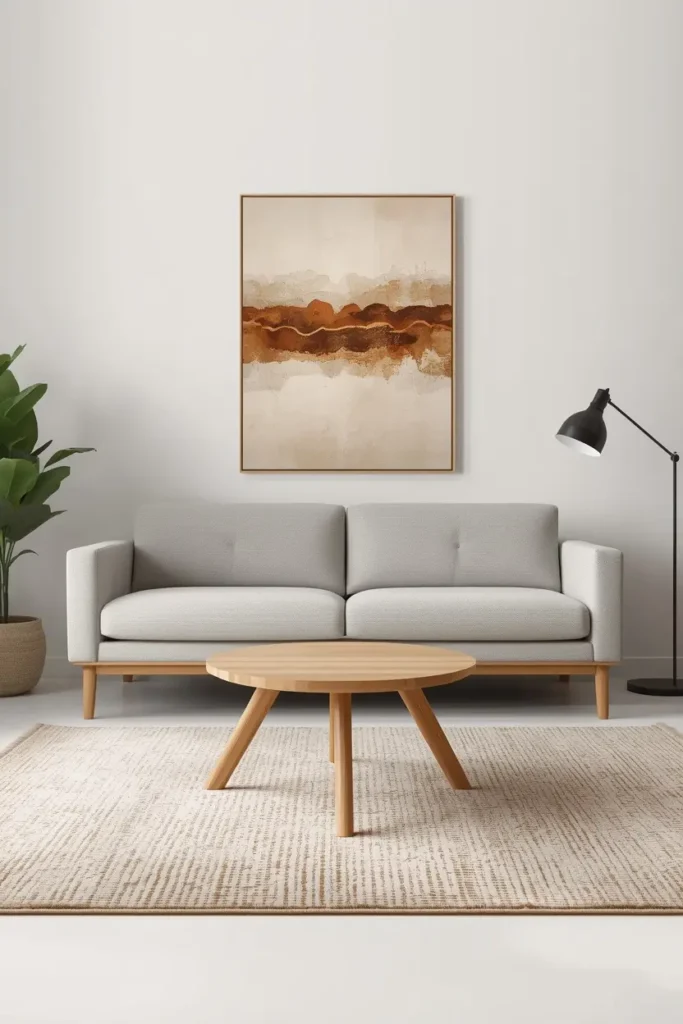
A sofa pushed against a wall with nothing under it tends to read as a waiting area, not a real room. Place one rug under the entire living zone, and set the sofa and coffee table so their front legs sit on the rug. Choose open legged furniture here, since it keeps the small room feeling light instead of heavy. Then pick one wall behind the sofa as your focal wall, and hang one large art piece or a tight gallery grouping there, rather than scattering small prints around the room.
Size the art to about two thirds the width of your sofa, and hang it with its center about 57 to 60 inches from the floor. Lean large pieces against the wall, or use removable hooks rated for the weight, and always check the hook rating before you hang anything. Budget about 60 to 250 dollars for a rug, plus 30 to 150 dollars for art and hooks. Avoid a rug that floats alone with no furniture touching it, and skip hanging many tiny prints across every wall in the room.
4. Lock one repeat palette across all zones, 60, 30, and 10
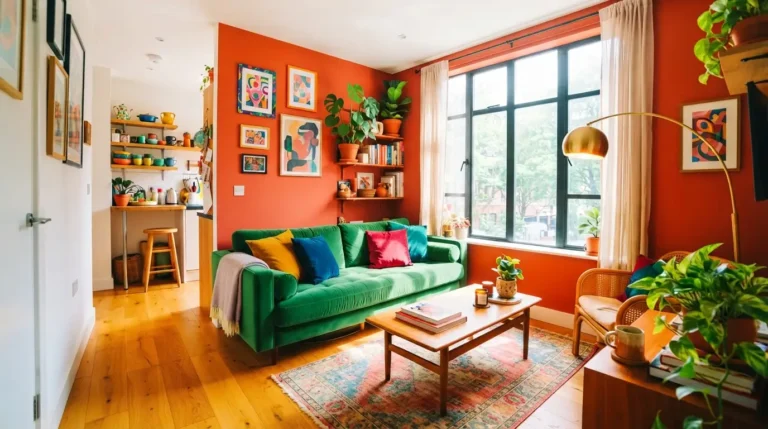
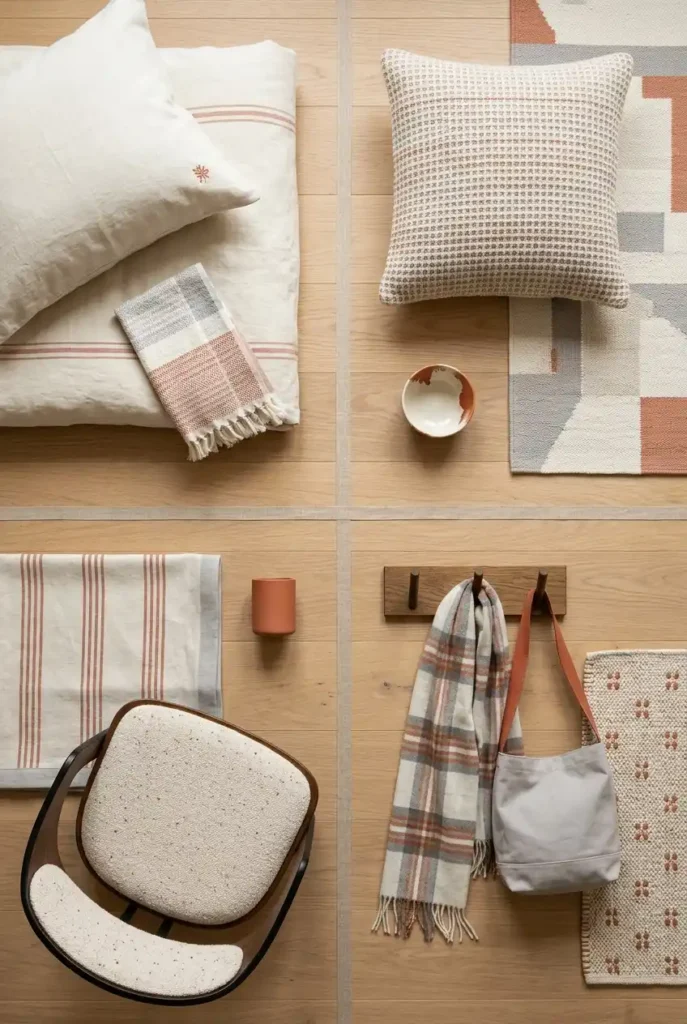
When every zone has its own colors, a studio looks like four small competing rooms instead of one finished one. Pick a warm ivory base, a second tone like light oak or soft gray, and one accent color. Repeat that accent at least twice in every single zone, through bedding, cushions, art, and one chair or throw. Design around your windows where you can, and carry the same accent into your curtains and other textiles so the eye connects the zones.
Aim for roughly 60 percent main color, 30 percent second tone, and 10 percent accent, judged across large surfaces rather than small items. Keep color in textiles and art, not in paint, unless your landlord has approved a paint change in writing. Expect to spend about 40 to 180 dollars on cushions, a throw, and accent bedding. Avoid introducing a new color in every zone, filling every corner with dark heavy furniture, or painting a bold accent wall without approval. See our guide to studio apartment color schemes for palette ideas that work across small spaces.
5. Layer light by zone, not one ceiling light
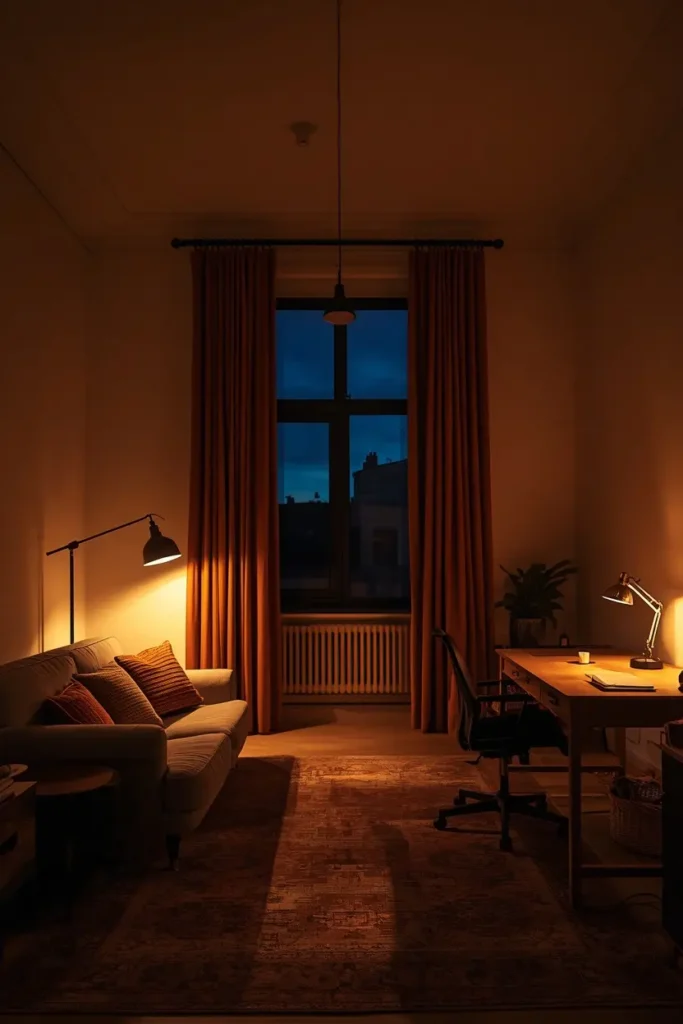
One ceiling fixture flattens a studio at night, and it makes every zone look exactly the same, which undoes all your zoning work. Add one floor or table lamp by the sofa, a small lamp beside the bed, and one task light at the work spot, all in a warm bulb color. Use wall mounted or plug in sconces where they fit. Hang your curtains high, close to the ceiling, and let them fall all the way to the floor, and make the most of any natural light during the day.
Mount curtains 4 to 6 inches below the ceiling, or at ceiling height if your track allows, and let the fabric reach the floor rather than stopping at the windowsill. Stick to plug in lamps and plug in sconces only, since wiring work is not renter friendly, and check that no cord crosses your walkway. Three lamps usually run about 60 to 200 dollars total. Avoid relying on one harsh overhead light, and skip cool toned bulbs overhead, since they make warm textiles look flat and gray.
6. Make the entry and the kitchen edge look finished, not leftover
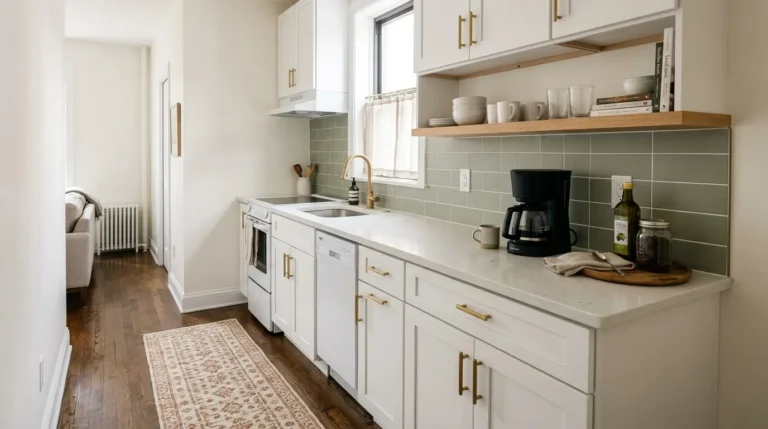
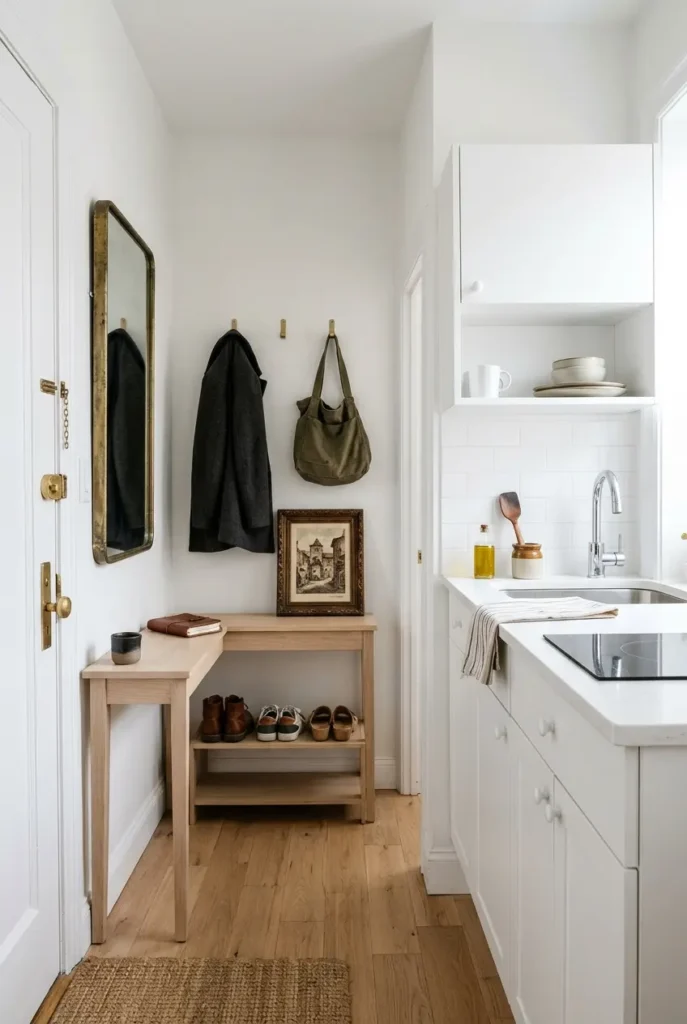
Without a clear system, coats land on the sofa and the kitchen edge turns into a pile of clutter the moment you walk in. Place a slim console table or bench by the door, with hooks above it for coats and bags, a small tray for keys, and a mirror to reflect light and add depth to the entry. Along the kitchen edge, add a slim console or a few stools, one closed basket for daily items, and keep one clear strip of counter open for prep work.
Keep the entry landing within about 24 to 30 inches deep, so it does not eat into your walkway, and leave at least a 24 inch clear strip on the counter for actual cooking. Use removable hooks and a freestanding console only, with no drilling, and make sure nothing blocks a door swing or a radiator. Budget about 40 to 160 dollars for hooks, a tray, a mirror, and one basket. Avoid an open pile of shoes and bags by the door, and skip open shelving on the kitchen edge that shows every item you own. Our small apartment kitchen decor ideas guide has more on that edge.
7. Give work a real corner that closes at night
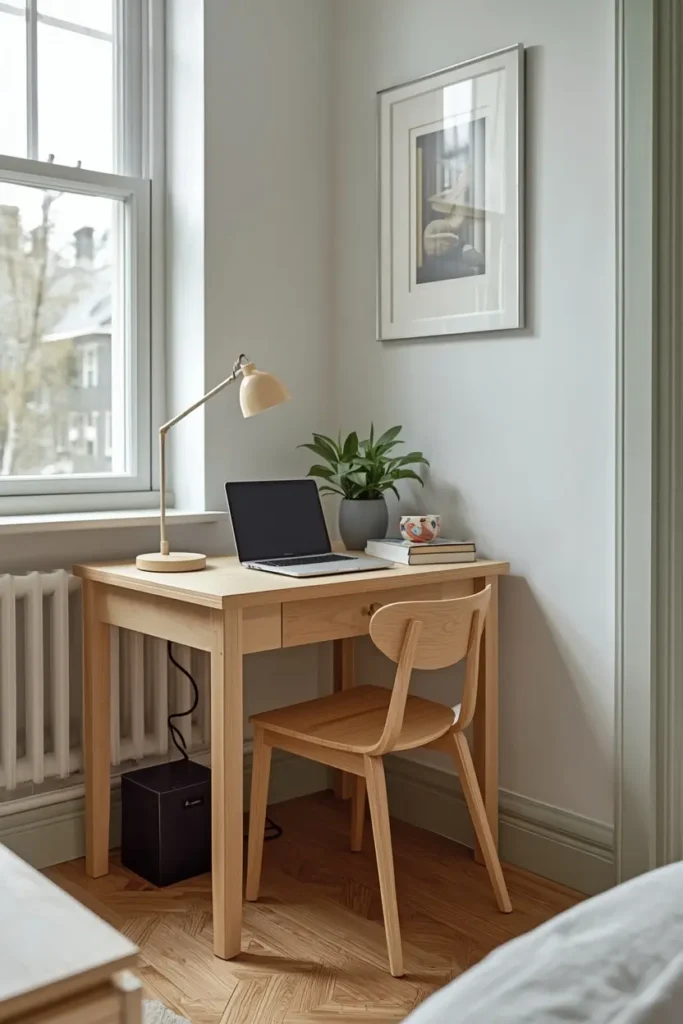
When there is no real desk, work spreads across the sofa and the bed, and rest never feels fully separate from the job. If your layout allows it, place a small desk or a fold away table by the window, where the light is best. Face the desk toward the wall or window, not toward the bed, add one task light and a small cable box, and close the zone down at night with a lidded box for papers and the chair pushed back in.
Look for a desk about 20 to 24 inches deep, and leave about 24 inches of clearance behind the chair so you can pull it out comfortably. Keep the desk freestanding, with no wall mounting, and use a plug in light only. A small desk or fold away table usually runs 50 to 200 dollars, plus 15 to 40 dollars for a cable box. Avoid using a full size dining table as a desk that never gets cleared, and do not face the desk directly at the bed as its main view. See our studio apartment home office ideas for layouts that fit small corners.
8. Finish with texture and closed storage, then run the 10 minute closeout
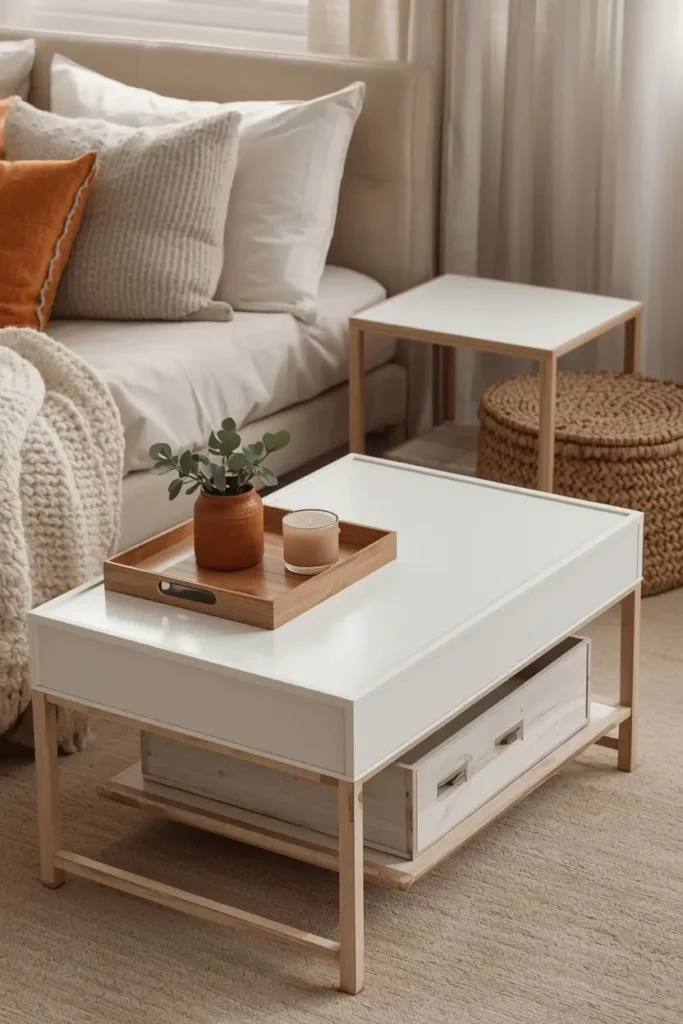
A studio can be fully furnished and still look unfinished if clutter is visible from every seat. Layer one rug texture, one curtain texture, and one bedding texture, all within your repeat palette, and add a plant or two to soften hard corners. Display a few favorite objects instead of every item you own, then move daily clutter into lidded baskets, under bed boxes, and one closed cabinet. Style the coffee table and nightstand with restraint, tuck away visible cords, and leave one clear surface in each zone.
That one clear surface, at least about 12 by 12 inches per zone, is your finish test. Walk in from the doorway and check that each zone reads clearly before you add anything else. Keep all storage freestanding, since it needs to move out with you later. Expect to spend about 40 to 150 dollars on baskets and under bed boxes. Avoid open shelves packed edge to edge, and resist buying more small decor before your clutter has a closed home to live in.
Your copyable checklist
Work through these studio apartment decorating ideas in order: map the zones, finish the sleep zone, anchor the living zone, lock the repeat palette, layer the light, finish the entry and kitchen edge, close off the work corner, then add texture and closed storage.
Measurements to keep on hand
|
What |
Target size |
|---|---|
|
Walkway |
30 to 36 inches |
|
Art center height |
57 to 60 inches from floor |
|
Art width |
About two thirds of sofa width |
|
Sleep divider height |
At or below bed height |
|
Curtain mount |
4 to 6 inches below ceiling |
|
Desk depth |
20 to 24 inches |
|
Entry landing depth |
24 to 30 inches |
|
Clear surface per zone |
At least 12 by 12 inches |
If you have this, do that
Use these studio apartment decorating ideas to decide fast. If you have a sofa, turn its back toward the bed to mark the sleep zone. If you have no sofa yet, use a low open bookcase instead. If you have a window wall, put the work corner there for the best light. If you have no window wall, put the living zone there instead, and use a mirror across from the window to bounce light around the room.
What not to buy
With these studio apartment decorating ideas, skip a full size dining table you will not use daily, a tall solid divider that blocks light, a heavy bed curtain that stays closed, many tiny scattered prints, dark heavy furniture in every zone, and open storage for things you use every day.
Finishing the room
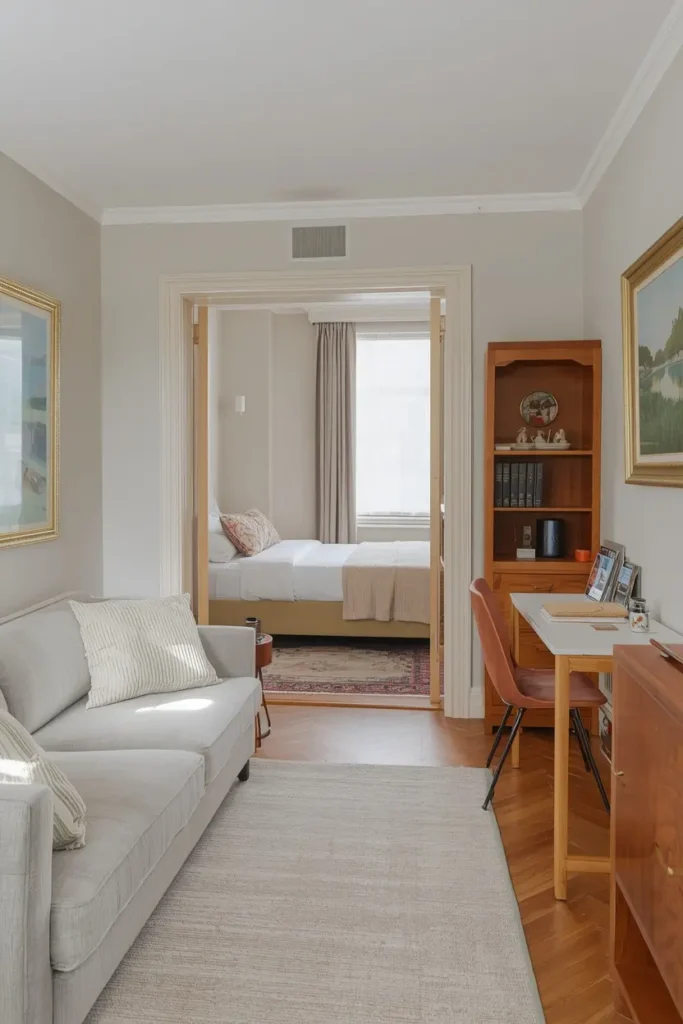
These studio apartment decorating ideas all come back to the same finish test. Four clear zones, one repeat palette, one light per zone, and a walkway you can actually walk. You do not need new walls, paint, or a bigger budget to get there. You need a plan on paper, a repeat color, and a few pieces that close off clutter at the end of the day. Work through the checklist this weekend, and by Sunday night your studio apartment decorating ideas will feel like a finished, settled home instead of one open room.
The 30 to 36 inch walkway and the 60, 30, 10 palette used above are covered in more depth in this outside resource on studio apartment decorating.