13 Ideas for Where to Put a Christmas Tree in a Studio Apartment
A studio gives you one room for everything, which is why deciding where to put a Christmas tree can feel harder here than in a larger home. The tree cannot just look good. It has to leave your walkway clear, your bed reachable, and your desk usable all December. Get the placement right, and the tree becomes a festive highlight instead of an obstacle you have to squeeze past.
This guide explores where to put a Christmas tree in a studio apartment, working through the room zone by zone: living, sleeping, dining, working, and the in-between spots most people forget. Each idea explains where the tree goes, why it works, and what to watch out for. The same placement principles can help in any small home where floor space is limited.
1. Claim the Quiet Corner
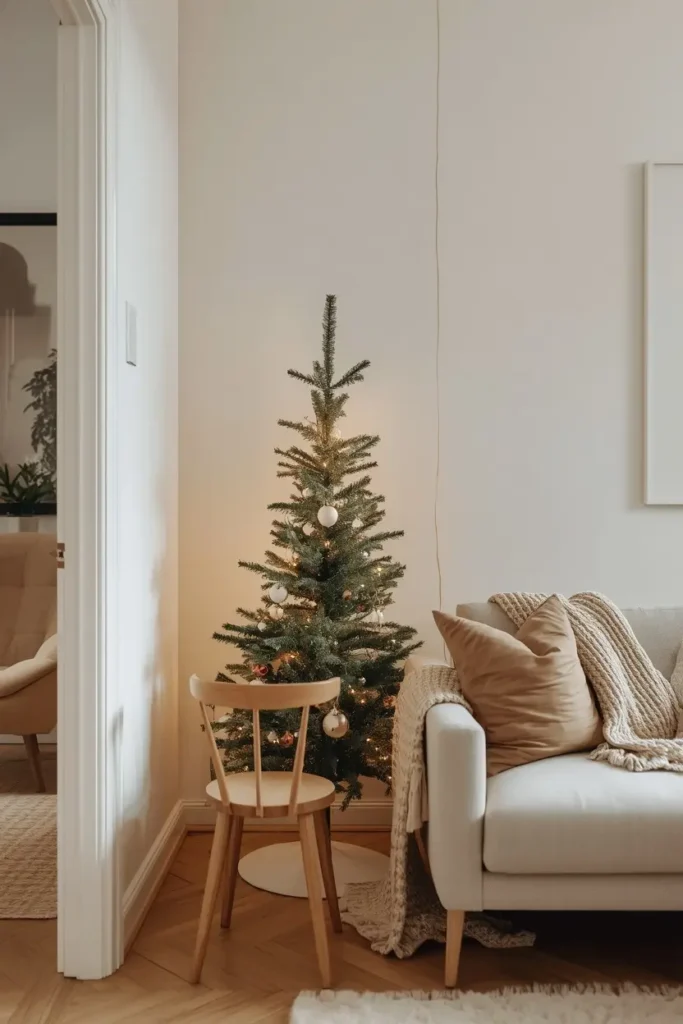
In most studios, the safest first option is the quiet corner beside the sofa. It is often a low-traffic spot in the living zone, where you can enjoy the tree without sacrificing space you use every day. An armchair angled nearby can make the arrangement feel intentional rather than like an afterthought.
Check three things before you commit: a clear path past the tree, a nearby socket so the cord does not cross the room, and enough distance from radiators or heaters. If the corner fails any of these checks, it may become a bottleneck rather than a practical spot.
2. Frame It in the Window
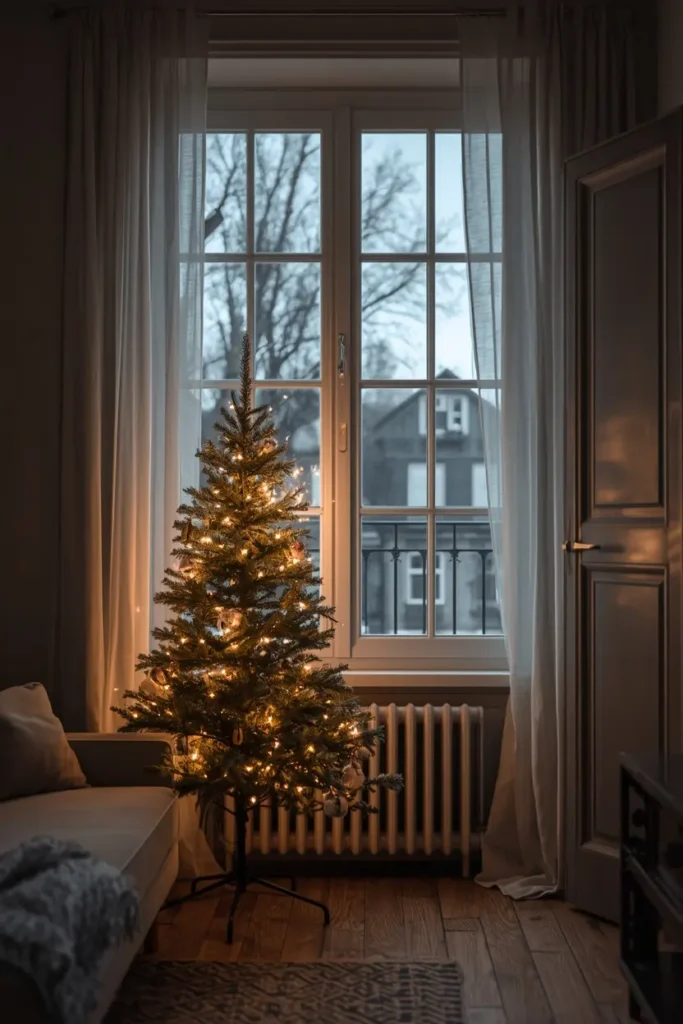
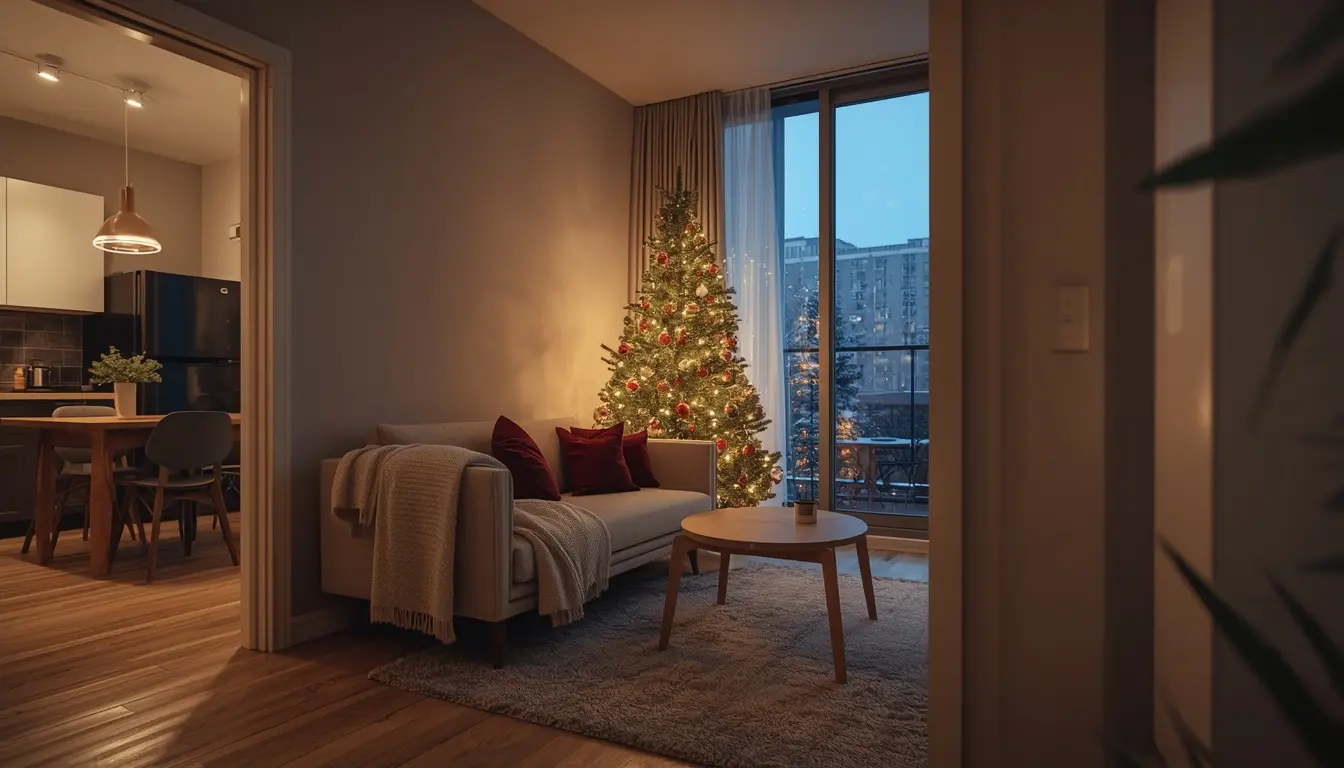
A floor tree beside the window is a classic choice for a studio apartment. During the day, the branches frame the glass, while at night the lights can reflect in the window, making the display feel more prominent. Place the tree at the window’s edge rather than directly in front of it, so you preserve as much daylight as possible.
Check for nearby heat sources, especially radiators beneath windows, and leave enough space for curtains or blinds to move freely. If the window is also a balcony door, keep its opening and step-through area clear. Our Christmas balcony decor ideas offer more ways to decorate that area without obstructing access.
A windowsill mini tree is a related but different option. It takes no floor space and works as an accent beside a main tree, or as the only tree in a very small studio. Keep it light and stable on the sill, particularly if the ledge is narrow or sits above a radiator.
Pro Tip:
est your curtains or blinds before decorating. If the tree blocks a pull cord or prevents the blinds from opening fully, move it a few inches before adding lights and ornaments.
3. Anchor the Media Wall

If you are deciding where to put a Christmas tree in a small living room, consider the end of the media wall. The TV wall is already a focal point, so placing the tree beside the console can make the display feel coordinated instead of creating a competing focal point.
Sit in your usual spot and check that the screen remains visible once the branches are fully arranged. Route the cord behind the console so it does not cross the floor, and keep the tree clear of warm air vents.
4. Greet at the Entryway
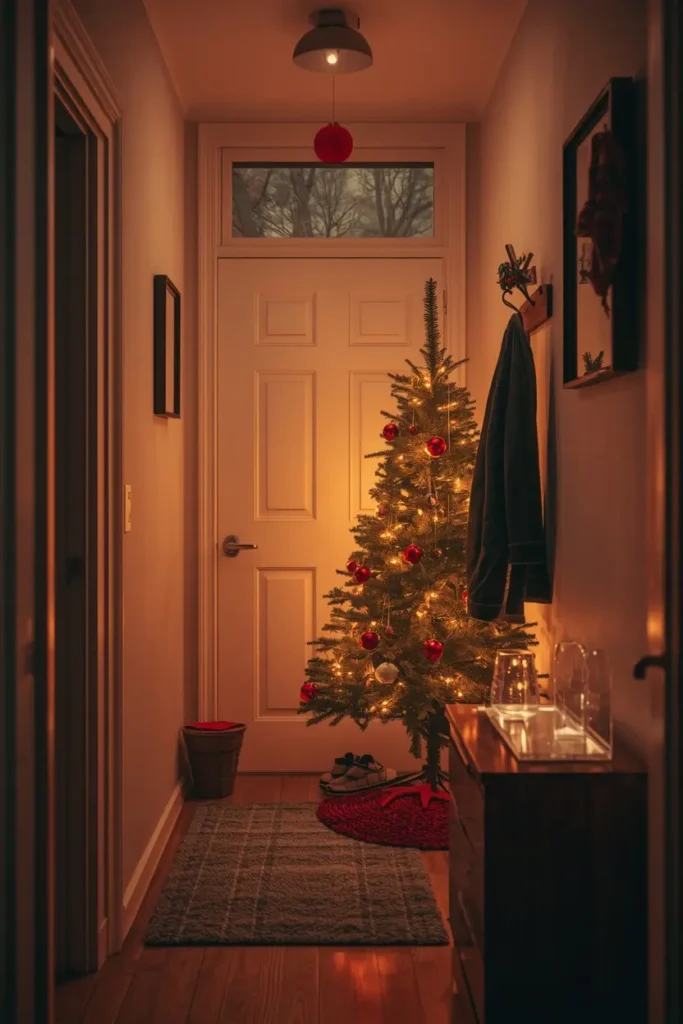
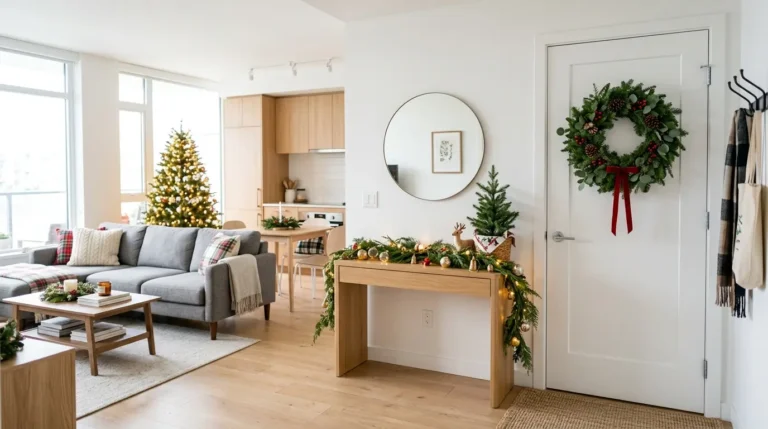
The entry can be one of the few underused areas in a studio, and a tree here creates a festive welcome for you and your guests. Our small entryway Christmas decor ideas show how much a narrow entrance can accommodate. Place the tree close to the wall beside the door, on the side that does not interfere with the door’s swing.
Test the space before decorating: open the door fully, walk in carrying something, and try accessing your coat and shoes. If any of these tasks feels awkward, the tree is intruding into the traffic path. Keep the route from the bed to the exit clear, too.
Pro Tip:
Mark the door’s swing on the floor with painter’s tape before positioning the stand. This helps you avoid placing branches where they will obstruct the doorway.
5. Tuck It Behind the Sofa
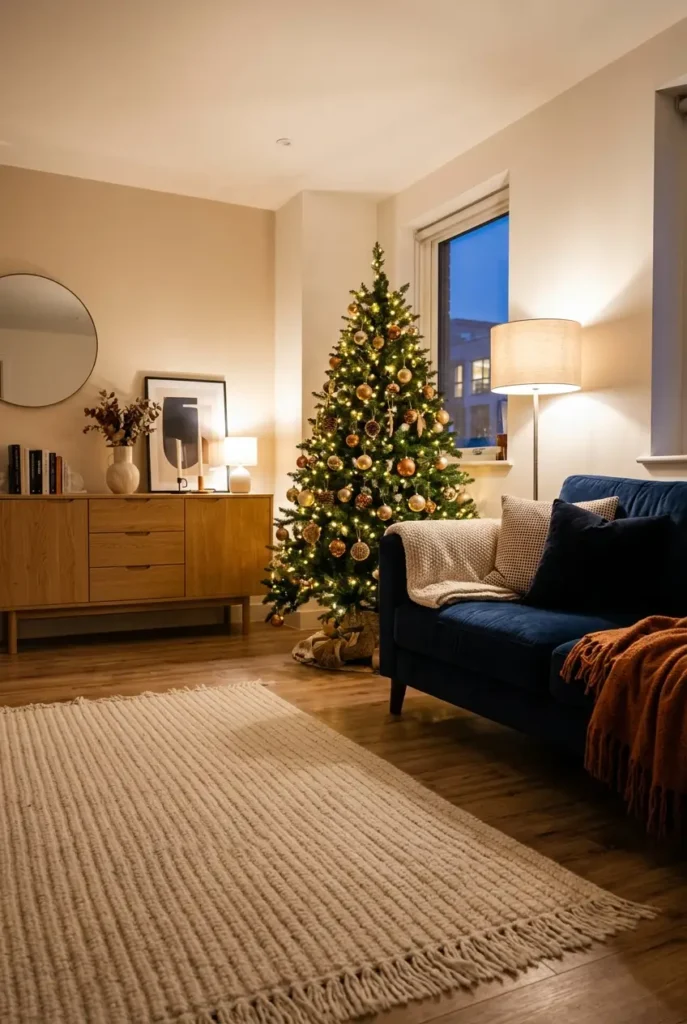
Look behind your sofa. Some studios have a narrow strip of floor there that is too small for useful storage but can still accommodate a tree. A tree in that strip can rise above the sofa back, read as part of the living zone, and make use of space that might otherwise go unnoticed, provided the sofa can sit safely away from the wall without narrowing the main walkway.
Pull the sofa out only as far as the tree and stand require, and check that the tree remains level and stable. You will also need to reach the switch without moving the sofa every week, so lights with a timer or remote can be useful here.
6. Divide Zones With a Slim Tree

Place the tree along the boundary between the living and sleeping zones. It creates a visual pause between the sofa and bed, helping each area feel more defined without adding a permanent divider. This uses the same zoning principle found in well-planned studio apartment layouts, but with a temporary festive feature instead of another piece of furniture.
The focus here is separation, not tree shopping. A narrower footprint can help the tree sit along that boundary without crowding either zone. Keep a clear walking path on at least one side, and consider how the tree looks from the sofa, where you are likely to spend time enjoying it. For help choosing a suitable tree, see our guide to small Christmas tree ideas for apartments.
Pro Tip:
Live with the placement for one evening before decorating. Walk your usual route from the bed to the bathroom, including in low light, and adjust the tree until the path feels natural.
7. Beside the Dining Table
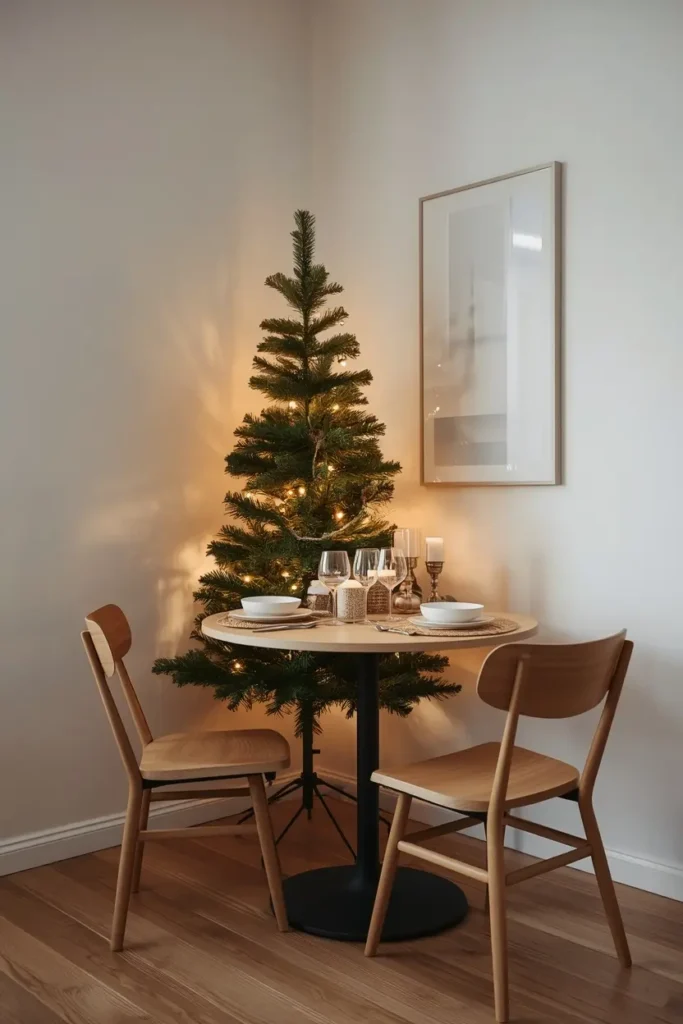
The corner just outside your dining table’s footprint can be a practical place for a Christmas tree. The dining area may be used for only part of the day, while the tree remains visible during meals and everyday activities. Position it beyond the space needed for pulled-out chairs so it adds to the dining area without interfering with it.
The key test is whether the chairs can move freely. Pull every chair out as if guests were seated, then check the tree’s position. Keep branches away from plates, dishes, and candles, and plan for the nearest socket so the power cord does not cross the dining area.
8. Beside the Desk
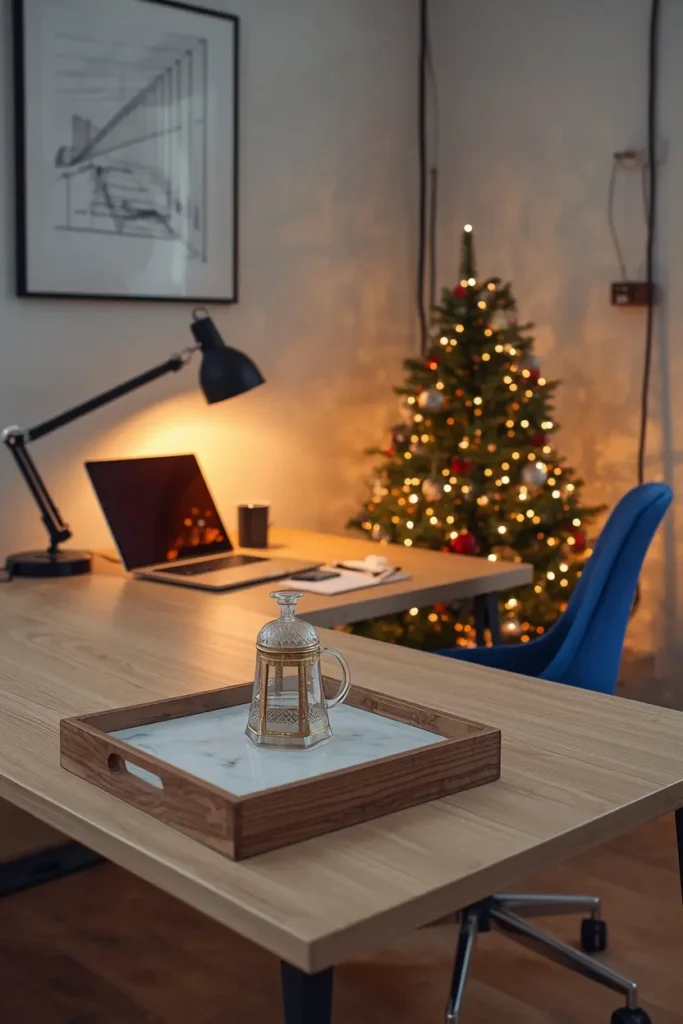
Your desk is where you may spend much of the day, so it can be a good place to enjoy a festive view. Position the tree beside the desk, away from your chair’s movement, so the lights sit at the edge of your vision without taking up legroom.
Keep the chair’s roll-out space clear because casters can catch on the stand or branches. Check for screen glare with the lights switched on, and route cables along the wall rather than across the floor.
9. Use an Alcove or Recess
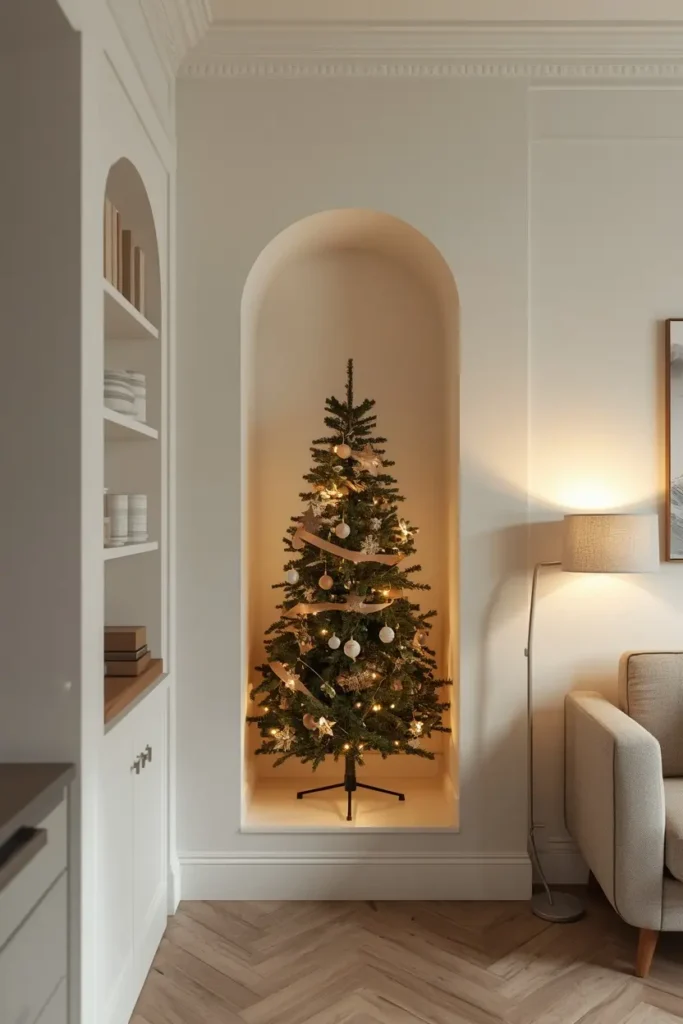
An alcove or recess can function like a built-in tree nook. Its walls help define the display, and the position may keep the tree away from door swings, chairs, and the main walkway. For many studio dwellers, this can be a straightforward answer to where to put a Christmas tree because the room already has a space that can accommodate it.
Measure the available depth, including the stand, and leave enough clearance so the branches are not compressed and nearby doors or cupboards remain usable.
10. At the Edge of the Sleeping Zone
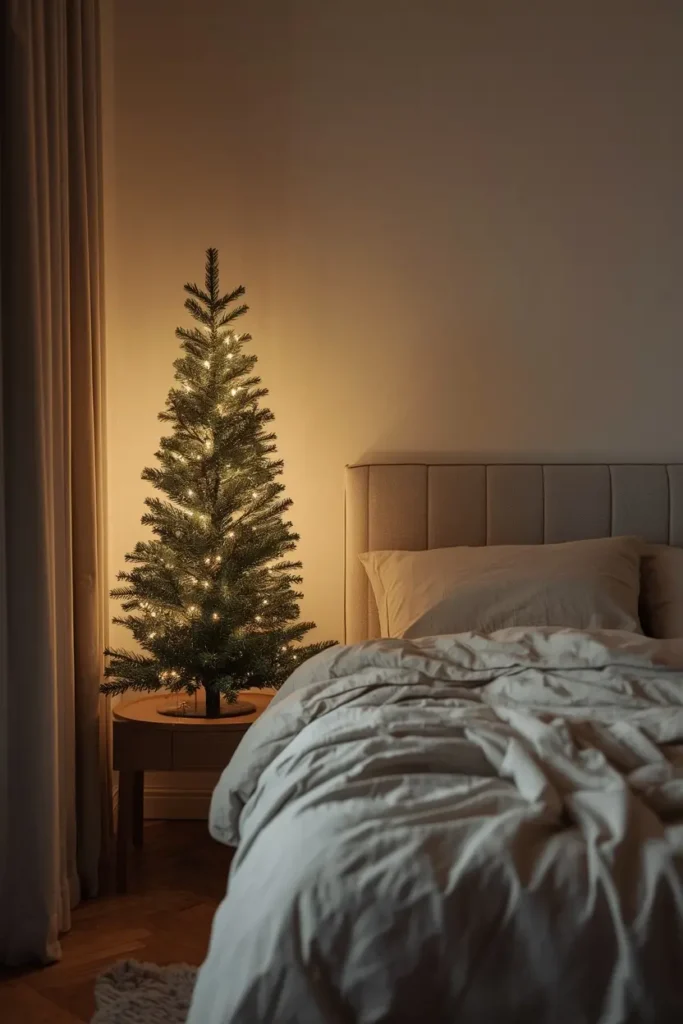
The edge of the sleeping zone, where the bed area meets the rest of the room, lets you enjoy the tree without placing it in the middle of your sleeping space. Position it beside the bed rather than at its foot if that area is part of your route to the bathroom. Our studio apartment bedroom ideas offer more ways to make a compact sleeping zone feel organized and calm.
Keep branches clear of bedding and avoid leaving decorative lights on while you sleep. If you use battery-powered lights, follow the manufacturer’s instructions and switch them off before bed. A nightstand tree is a smaller alternative: a mini tree on the nightstand provides a festive glow without taking up floor space.
Pro Tip:
If you use a timer for your tree lights, set it to switch off before you go to sleep. You can enjoy the glow while winding down without leaving the display lit overnight.
11. Lift It Onto a Console or Dresser
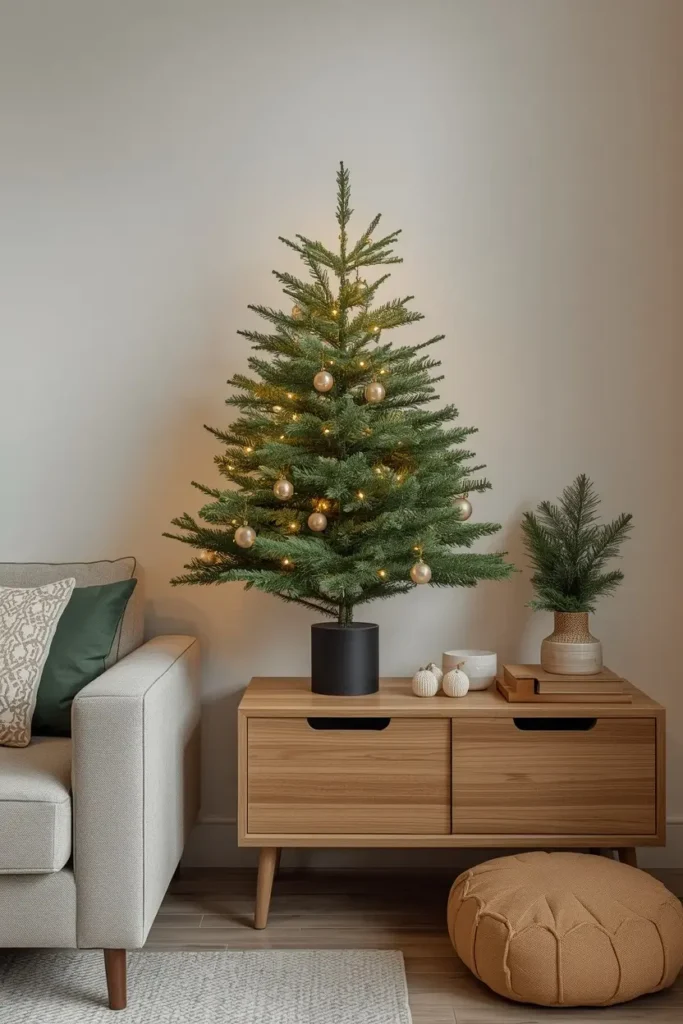
When the floor is already full, consider going up instead of out. A tabletop tree on a console or dresser creates a festive focal point without using floor space, while leaving some of the surface available for everyday items. Choose a surface you can see from the main living area, and keep enough of it clear so the room does not feel cluttered.
Stability matters. Use a wide, steady base, make sure the surface does not wobble, and center the tree’s weight. A kitchen counter can work for a mini tree, too, provided it is kept away from hob heat, steam, and sink splashes, with enough counter space left for food preparation.
12. Trade Places With a Chair

Floor space in a studio is a trade-off, so one practical solution is to swap the tree for a piece of furniture you can temporarily move. Take an occasional chair out of the room for December and put the tree in its footprint. This keeps the same amount of floor space in use rather than squeezing the tree between furniture.
A large houseplant can be swapped out in the same way. Move it to a quieter spot for the season and let the tree take its place.
Store the chair or plant where it will not block a walkway, entry, or cupboard. Take a photo of the original arrangement so you can restore the room easily in January.
Pro Tip:
Swap the chair you use least, not simply the one that is easiest to move. The arrangement only works if you do not miss the seat during the holiday season.
13. Use the Wall
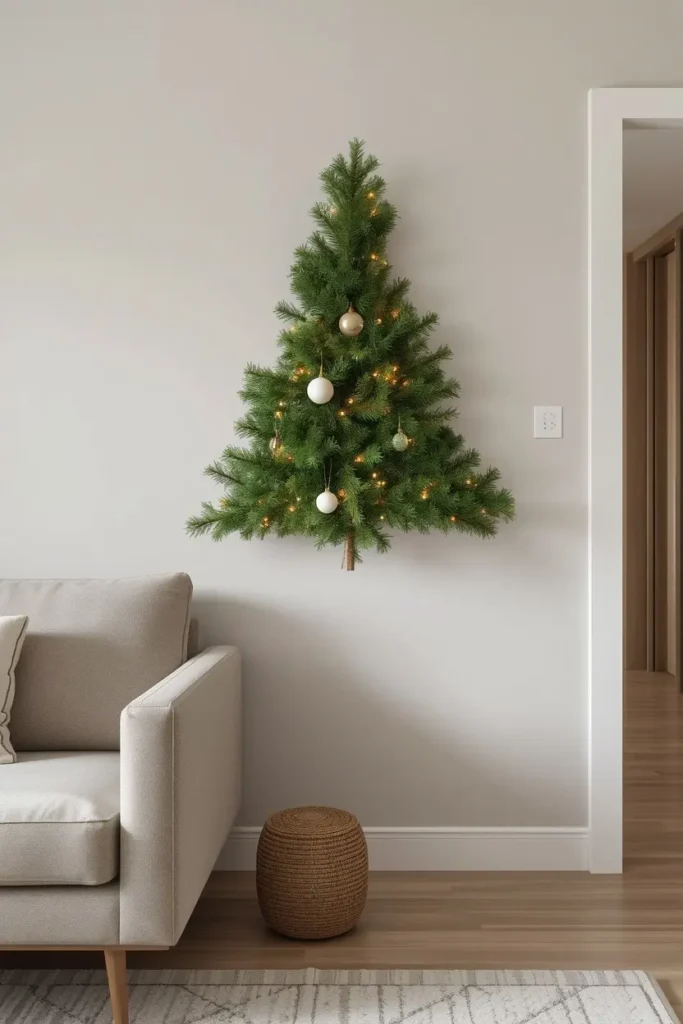
The wall can help free up floor space in two different ways. A flat-back tree stands on the floor with its back close to the wall and branches mainly at the front. Depending on its design, it can take up less depth than a full, round tree. It may suit a narrow strip of floor beside a wardrobe or another piece of furniture, where you want a tree without taking up as much walking space.
A wall-hung tree uses no floor space at all because the tree shape is fixed flat against the wall. This can suit a studio where every floor-level spot is already in use, but the display must be secured properly. Choose fixings suited to the wall material and the full decorated weight, check your rental agreement before drilling, and avoid placing the display where it could fall into a walkway or sleeping area.
Both approaches use the wall to reduce the floor footprint, but the right choice depends on the available space and how securely the tree can be positioned.
Pick a Tree You Can Store
Placement does not end in January. Where to put a Christmas tree for the other eleven months matters, too. Choose the tree and its future storage spot together. A tree that comes apart into a storage bag, or fits flat on a cupboard top or under the bed, is often easier to manage in a studio.
It is the same thinking behind our DIY small apartment Christmas decor ideas, where the whole scheme can fit in one box. Before buying, identify the exact shelf, cupboard, or gap where the tree will live, then measure it. If you cannot identify a suitable storage spot, factor that into your choice before committing to a tree.
Placement Mistakes to Avoid
Most Christmas tree placement problems start before the first ornament goes on. Common mistakes include blocking a walkway or door swing, placing a tree too close to a radiator or heater, running cords across a walking path, covering the window that provides the room’s daylight, or positioning the tree where it obstructs the TV.
Do a five-minute test before decorating: stand the tree in place, sit in your usual spots, open every door, and walk your normal routes. For more information about seasonal fire safety, read the NFPA Christmas tree safety guidance, especially its advice on keeping trees away from heat sources and watering real trees. Moving an undecorated tree is easier than rearranging the room after everything is in place, so check the location first.
Conclusion
Where you put the tree can determine whether December in a studio feels festive or cramped. Think in zones rather than squeezing the tree into the first available gap. A corner, wall, surface, or furniture swap may give you the space you need while keeping everyday routes clear. Test the placement before decorating, then enjoy a festive room that still works for daily life.
Frequently Asked Questions
Browse all our Decor & Aesthetics ideas.