13 Studio Apartment Ideas With No Closet: Smart Storage Solutions
A studio apartment without a closet turns getting dressed into a daily puzzle. Clothes end up on a chair, shoes pile by the door, and there is no single spot to put anything away. These studio apartment ideas with no closet give every piece of clothing a real home, using furniture and wall space you already have instead of a built-in closet you do not.
Each idea below is a full system, not just a product suggestion. You will find the exact steps, a measurement to check in your own space, whether it needs drilling or landlord permission, a rough cost range, and what to avoid, so you can build a setup that actually works in your unit.
1. Freestanding Wardrobe or Armoire
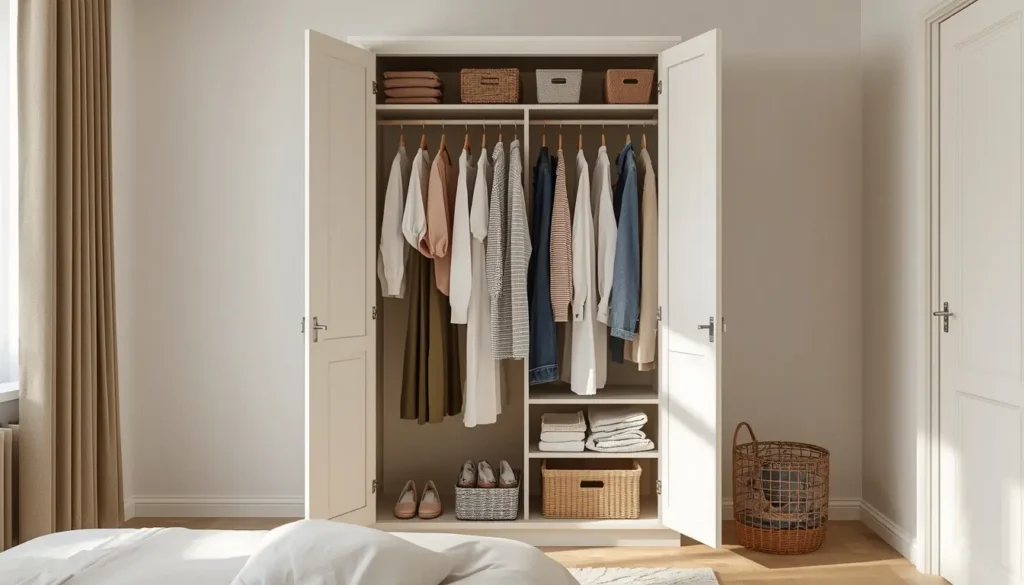
Without a closet, the moment you notice the problem is laundry day, when clean clothes have nowhere to go but a pile on the bed or floor. A freestanding wardrobe or armoire is the most direct wardrobe alternative for renters, since it works like a closet you can take with you when you move.
Measure your wall space before shopping. Most studio wardrobes run about 30 to 47 inches wide and 20 to 24 inches deep, so check that width against your wall and leave at least 24 inches of clearance for the doors to swing open fully. Look for one with a hanging rod plus a few shelves, so both hanging and folded clothes have a spot.
This is a freestanding piece, so it needs no drilling and moves with you at the end of your lease, though you may want help carrying it since many models are heavy even unassembled. Approximate cost runs from about $150 for a basic flat-pack model to $600 or more for a larger or solid-wood piece, and prices vary by retailer, so treat this as a range to confirm, not a quote.
Avoid placing a wardrobe against a wall shared with a window or radiator, since heat and sun can warp some finishes over time. This option benefits anyone who wants to combine hanging and folded storage in one piece, though the trade-off is floor space, since even a slim wardrobe takes up more square footage than a wall-mounted option.
Pro Tip:
If you are between two widths, size down. A wardrobe you can walk around easily gets used daily; one that blocks a walking path becomes a place to pile things on top of, not inside.
2. Garment Rack or Rolling Clothing Rack
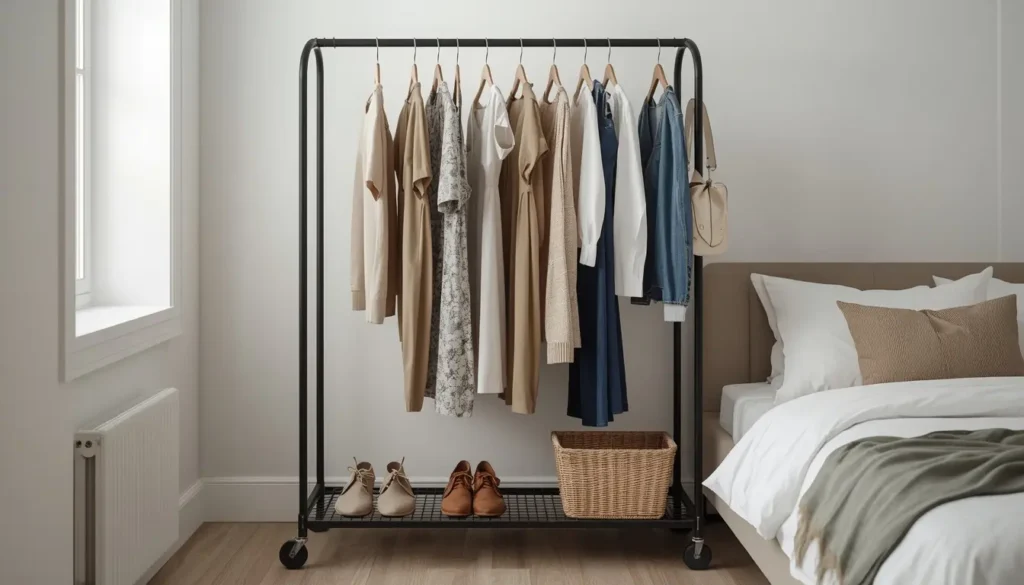
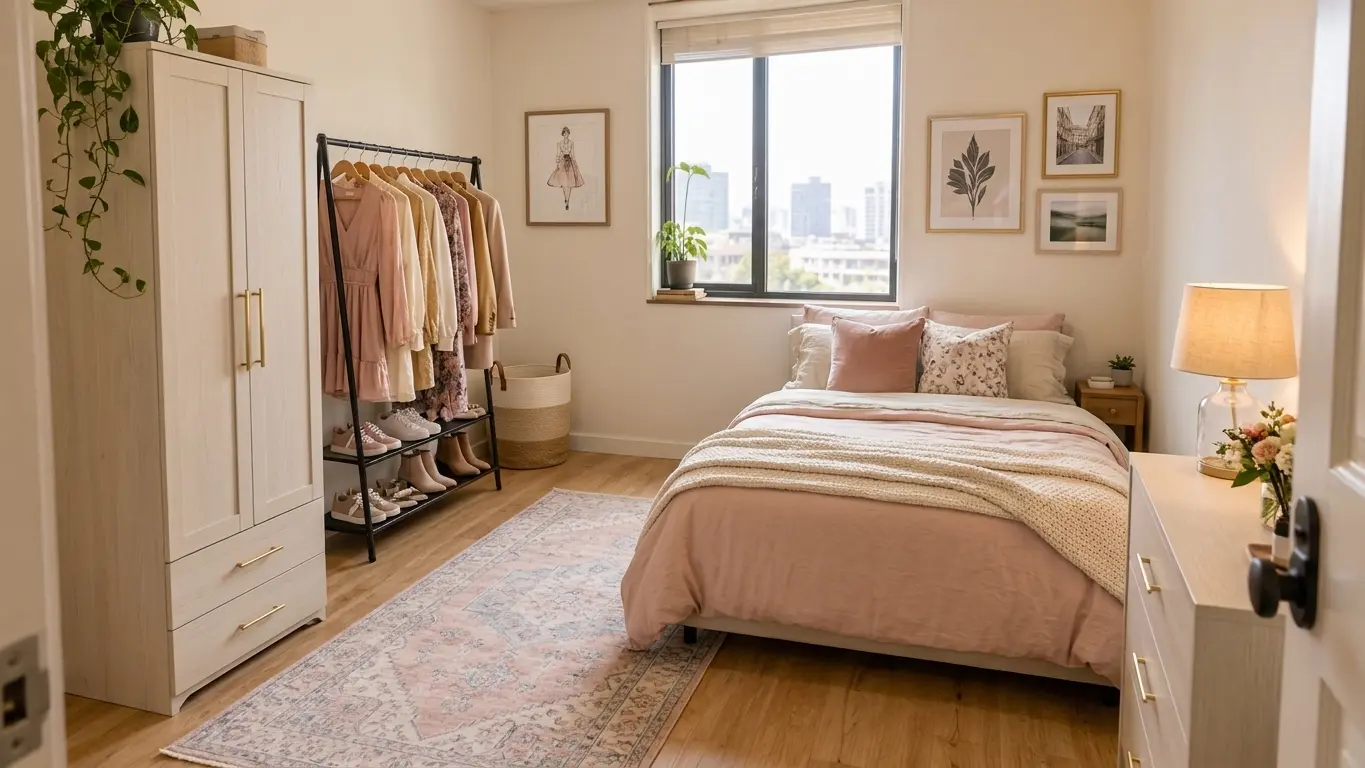
The problem shows up the first week you move in: you have clothes but nowhere to hang them, so they stay in a suitcase or a box. A garment rack solves this fastest, since most arrive ready to use within minutes.
Choose a single-rod rack for a smaller wardrobe or a double-rod rack for more hanging space in the same footprint. Set it against a wall out of the main walking path, and use matching hangers so the rack looks intentional rather than like unpacked moving boxes.
A standard single rack needs a floor footprint of roughly 40 to 60 inches wide by 18 to 20 inches deep, so measure that stretch of wall before buying. Leave at least 24 inches of clearance in front so you can see and reach everything on the rod.
This is a renter-friendly, freestanding piece with wheels, so there is no drilling and it rolls wherever you need it, including out of the way for guests. Approximate cost runs from about $25 for a basic rack to $90 or more for a sturdier double-rod model, as a range to verify with current retailers.
Avoid overloading one rod past its stated weight rating, since a bent rod dumps your whole wardrobe onto the floor at once. A rolling garment cart for a studio apartment suits anyone who wants hanging storage without committing to a large furniture piece, though the trade-off is that clothes stay visible, which can read as cluttered if the rack is not kept neat.
3. Open Wall-Mounted Hanging System
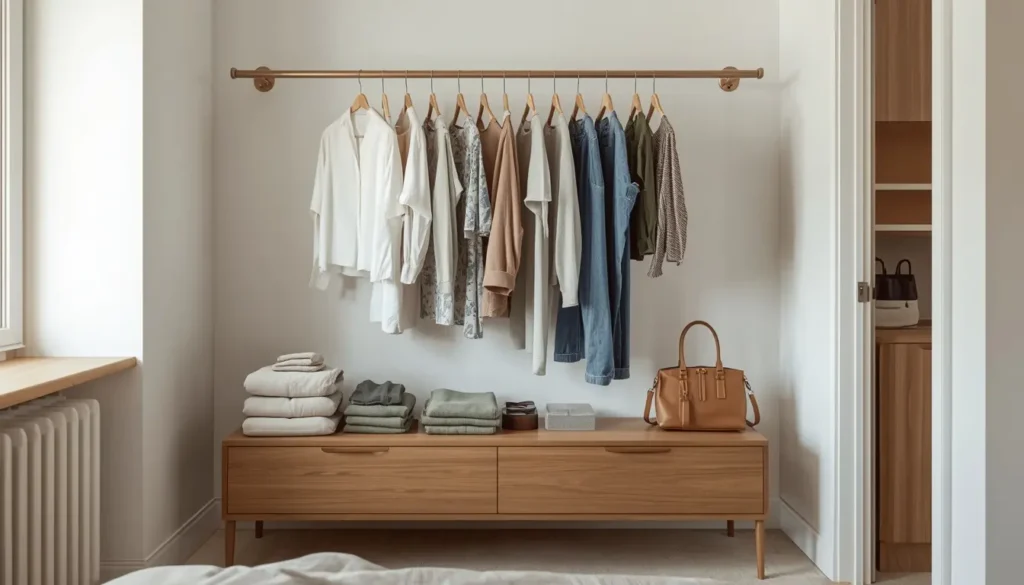
The problem is bare wall space next to a kind of storage you cannot use, since there is no closet to put a rod inside. An open wall-mounted hanging system turns that blank wall into closet ideas for a studio apartment without building an actual closet.
Install one or two hanging rails at about 66 to 72 inches off the floor for long garments, or stack a shorter rail with a shelf above it for folded items. Add S-hooks below the rail for belts, bags, or pants that do not need full hangers. Keep the whole system against one wall so it reads as a styled display, not clutter.
Measure the wall run you plan to use and make sure nothing hangs lower than about 6 inches above the floor, so vacuuming and foot traffic stay easy. A single rail run of about 36 to 48 inches comfortably holds a week’s worth of daily outfits.
Some rail systems mount with screws into a wall stud, which needs landlord permission in most leases, while lighter rail kits use heavy-duty adhesive strips rated for a few pounds per strip. Check your lease and the product’s weight rating before you buy. Approximate cost runs from about $20 for a single adhesive rail to $120 or more for a full modular shelving and rail kit, as a range to confirm.
Avoid mounting a rail with screws into drywall alone, since drywall anchors without a stud behind them can pull out under the weight of a full rod of clothes. This option benefits anyone who wants an open closet look and has at least one clear wall, though everything on it stays visible, so it works best for someone who keeps a tidy, color-sorted wardrobe.
Pro Tip:
If you do get permission to screw into the wall, anchor into a stud rather than drywall alone. A stud-mounted rail holds real weight; a drywall-only anchor is only rated for light decor.
4. Curtain-Covered Corner Closet
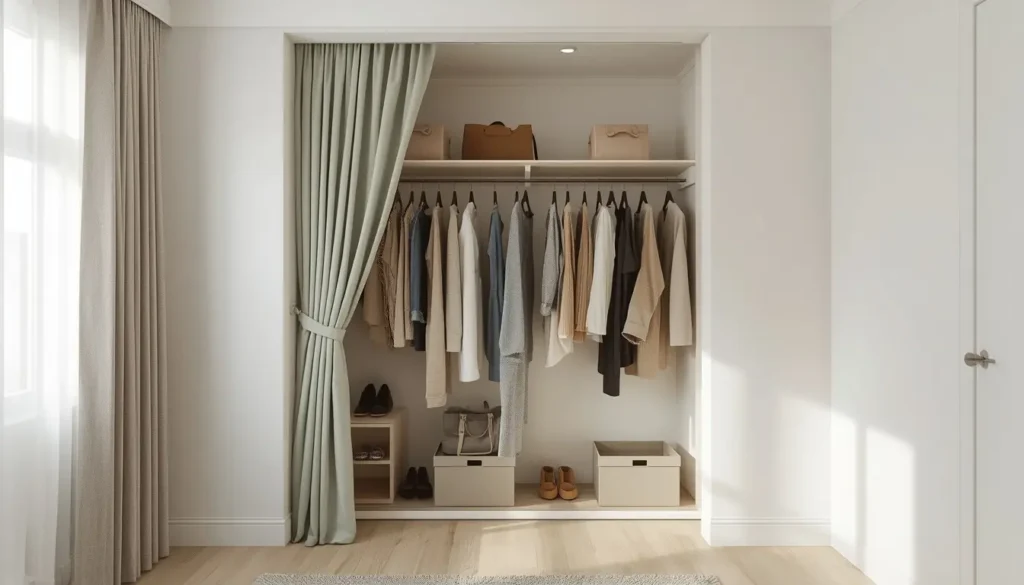
An awkward, unused corner is a common studio layout problem, and it is usually ignored because it is not wide enough for furniture. A curtain-covered corner closet turns that corner into one of the more popular studio apartment closet ideas, with full concealment and no construction.
Run a tension rod wall to wall across the corner, high enough to clear your longest garment, and hang clothes from it. Add a small corner shelf or floating shelf underneath for folded items, and a slim shoe rack on the floor. Finish with a curtain on a second, lower tension rod, or a folding screen, to hide the whole setup from the rest of the room.
Measure the corner’s width on each wall before buying a tension rod, since most adjustable rods extend from about 28 to 48 inches, and you want a snug fit with a little pressure so it does not slip. Leave about 4 to 6 inches of clearance between the rod and the ceiling so you can lift hangers on and off easily.
Tension rods grip by pressure, not screws, so this is fully renter-safe and leaves no marks when you move. Approximate cost runs from about $15 for a basic tension rod to $60 or more once you add a shelf and curtain, as a range to confirm with current prices.
Avoid overloading a tension rod with heavy coats, since most are rated for only a light to moderate hanging load and can bow or drop under too much weight. This setup benefits anyone who wants hidden storage and has an open corner to spare, though the trade-off is a slightly smaller usable footprint in that corner of the room.
Pro Tip:
Hang the curtain a few inches above the floor instead of letting it pool. It is easier to vacuum underneath, and the closet reads as neater from across the room.
5. Storage Bed
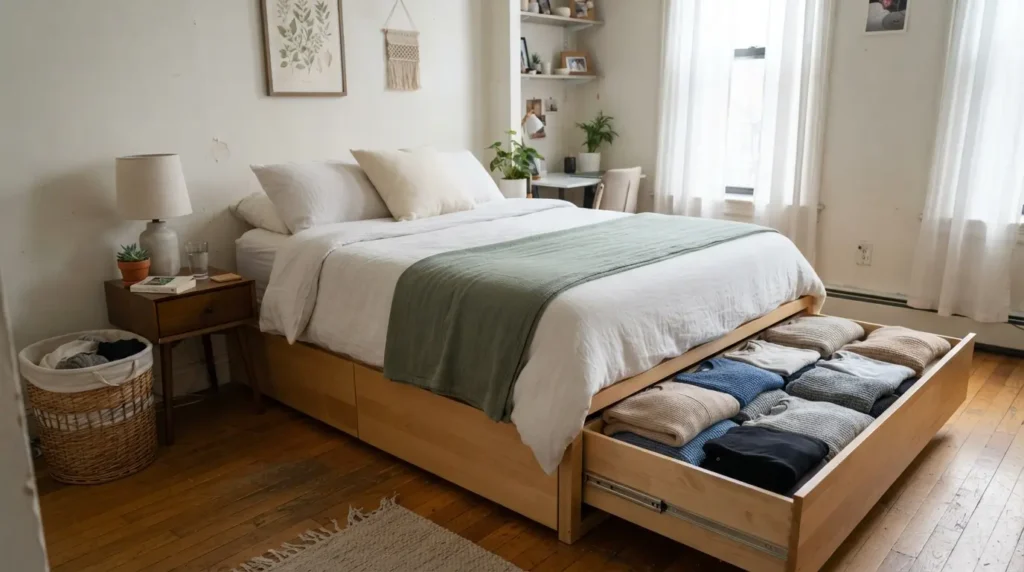
A bed takes up the single largest footprint in a studio, so the problem is obvious: that space does nothing for storage unless the bed itself is built for it. A storage bed turns that footprint into one of the most space-efficient studio apartment ideas with no closet available, since it adds storage without adding a single extra square foot of floor space.
Look for either a platform bed with built-in drawers along the base, or a lift-up frame where the whole mattress rises on a hinge to reveal one open storage cavity underneath. Use the drawers or cavity for bulkier items like sweaters, linens, and off-season coats, and keep everyday pieces elsewhere for easier access.
Measure your room for the bed’s full footprint plus clearance to open the drawers or lift the frame; a queen lift-up frame typically needs about 18 to 24 inches of clearance at the foot of the bed to raise fully. If you are buying new, compare a few models, since storage capacity varies a lot between drawer beds and lift-up beds.
A storage bed is freestanding furniture, so it needs no drilling and no landlord sign-off, though it is heavier to move than a standard frame. Approximate cost runs from about $400 for a basic drawer frame to $1,200 or more for a larger upholstered lift-up frame, as a range to verify by retailer.
Avoid buying a storage bed without checking the real mattress height once assembled, since drawer-base frames often sit higher than a standard frame and can make a low mattress feel more livable or a tall one feel cramped. This benefits anyone replacing a bed frame anyway, though the trade-off is the upfront cost compared with a standard frame plus bins.
6. Under-Bed Storage Bins
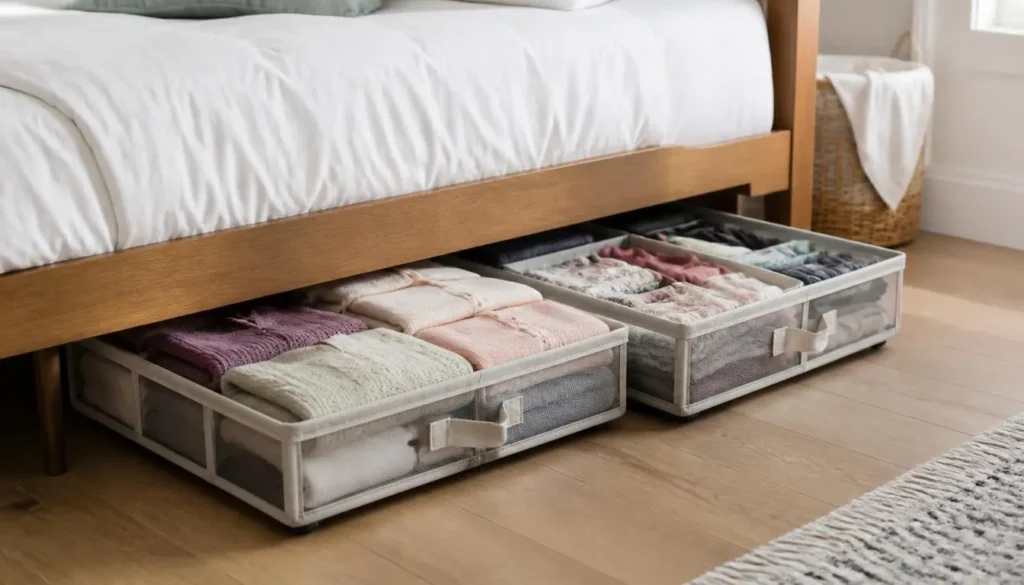
If you already have a regular bed, the space underneath usually sits empty, while off-season clothes, extra linens, or out-of-rotation shoes have nowhere else to go. Under-bed storage bins solve this without buying new furniture, and they are one of the most common pieces of advice for under-bed clothing storage for exactly that reason.
Measure the clearance under your bed frame first; many beds sit only about 4 to 7 inches off the floor, which is too low for standard bins. If your clearance is tight, add inexpensive bed risers to gain a few extra inches. Choose flat, rolling bins or fabric storage boxes sized to that clearance, and use clear or labeled containers so you can identify contents without opening every box.
Sort items before you store them: keep a bin for off-season clothing, one for extra bedding, and one for shoes you wear only occasionally. Vacuum storage bags work well for bulky items like comforters or winter coats, since they compress to a fraction of their folded size.
This is entirely freestanding and needs no installation, so there is nothing to check with a landlord beyond keeping the space clear enough for cleaning. Approximate cost runs from about $15 for a basic bin set to $50 or more for rolling bins plus risers, as a range to confirm.
Avoid using plain cardboard boxes long term, since they can pick up moisture and dust from the floor and do not hold up to repeated sliding in and out. This option benefits almost everyone with a standard bed frame, though the main limitation is that items stored here are less convenient to reach than something hanging at eye level, so keep daily wear elsewhere.
Pro Tip:
Save vacuum storage bags for things you touch once or twice a season, like comforters or winter coats. Clothes you wear more often get wrinkled and musty if left compressed for weeks at a time.
7. Storage Ottoman or Bench

A studio often needs a spot to sit near the bed or the entry, and a plain ottoman or bench wastes that opportunity by being solid instead of hollow. A storage ottoman for a studio apartment doubles as seating and as a home for items you want out of sight but close at hand.
Use the inside for folded sweaters, extra blankets, or shoes, and keep the lid clear on top so it stays usable as a seat or a surface for a tray. If the piece opens from the top, store items you need less often toward the back, since reaching to the bottom under a stacked pile gets old fast.
Measure the spot you have in mind, since a bench for the foot of the bed usually needs to match or sit shorter than the bed’s width, and a bench deeper than about 16 to 18 inches starts to crowd a walking path. Check the weight rating if you plan to actually sit on it regularly, not just use it as storage.
This is freestanding furniture, so no drilling or permission is needed. Approximate cost runs from about $60 for a basic fabric ottoman to $300 or more for a tufted storage bench, as a range to confirm.
Avoid an ottoman with a flimsy hinge if you plan to open it daily, since cheap hinges are the first thing to fail on heavily used storage furniture. This benefits anyone who needs extra seating anyway, though storage capacity is modest compared with a wardrobe or storage bed, so it works best for overflow rather than a full wardrobe.
8. Over-the-Door Organizer

The back of every door in a studio, including closet-free units, usually sits completely unused, even though it is some of the easiest storage to add. An over-the-door organizer captures that space for smaller items that do not need a hanger or a drawer.
Choose a pocket-style organizer for shoes, scarves, and folded accessories, or a hook-style rack for bags, hats, and jackets you wear often. Hang it over the bedroom or entry door, and keep bulkier or heavier items off it, since most are designed for lightweight daily pieces.
Measure your door’s thickness before buying, since most over-the-door hooks are designed for standard interior doors around 1.375 inches thick, and a thicker door may need an adjustable hook. Check that the door still closes and latches fully once the organizer is in place.
This hangs over the top of the door with no drilling and no adhesive, so it is fully renter-safe and comes off in seconds. Approximate cost runs from about $12 for a basic hook rack to $35 or more for a multi-pocket organizer, as a range to confirm.
Avoid loading heavy shoes or bulky sweaters into a lightweight pocket organizer, since the extra strain can pull the hooks away from the door frame over time. This option benefits anyone with a spare door and smaller accessories to organize, though the trade-off is limited capacity, so it works best as a supplement to another idea on this list, not your only storage.
9. Repurposed Cabinet or Bookshelf
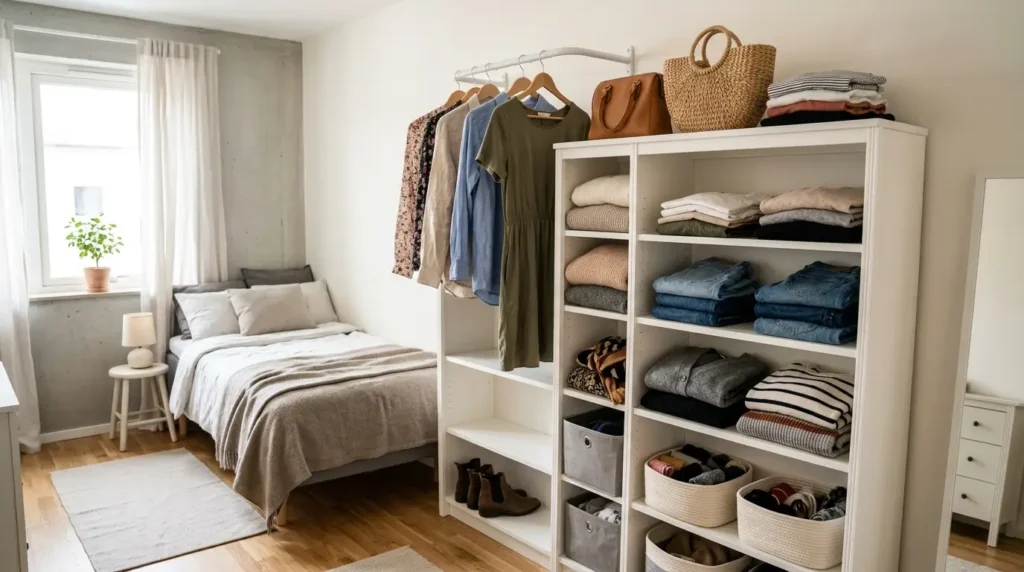
Furniture you already own for a different purpose, like a media console or a bookshelf, often has spare depth that goes unused once you stop filling it with books or electronics. Repurposing one is a practical way to hide clothes in a studio apartment without buying anything new.
Clear one section of shelving and group folded clothes into baskets or bins that match the shelf’s depth, so everything slides in and out easily. If the piece has doors, use the enclosed shelves for clothes and leave the open shelves for display items, so the room still looks intentional.
Measure the shelf depth and height before buying bins to go inside, since a bin that is even an inch too deep will stick out and stop a door from closing. A typical bookshelf cube runs about 11 to 13 inches square, which fits most folded-clothing bins designed for that size.
This uses furniture you likely already have, so there is nothing to install and nothing to check with a landlord. Approximate cost runs from about $0 if you already own the piece to $40 or more for a few matching bins, as a range to confirm.
Avoid stuffing shelves so full that doors will not close, since a door that is forced shut under pressure will eventually warp or pop open on its own. This benefits anyone with existing furniture to repurpose, though the trade-off is that it rarely holds a full wardrobe on its own and works best paired with a rack or wardrobe for hanging items.
Pro Tip:
Measure the cabinet’s interior depth before buying bins, not just the shelf width. A bin that is too deep is the most common reason a cabinet door stops closing flush.
10. Freestanding Coat Rack and Wall Hooks
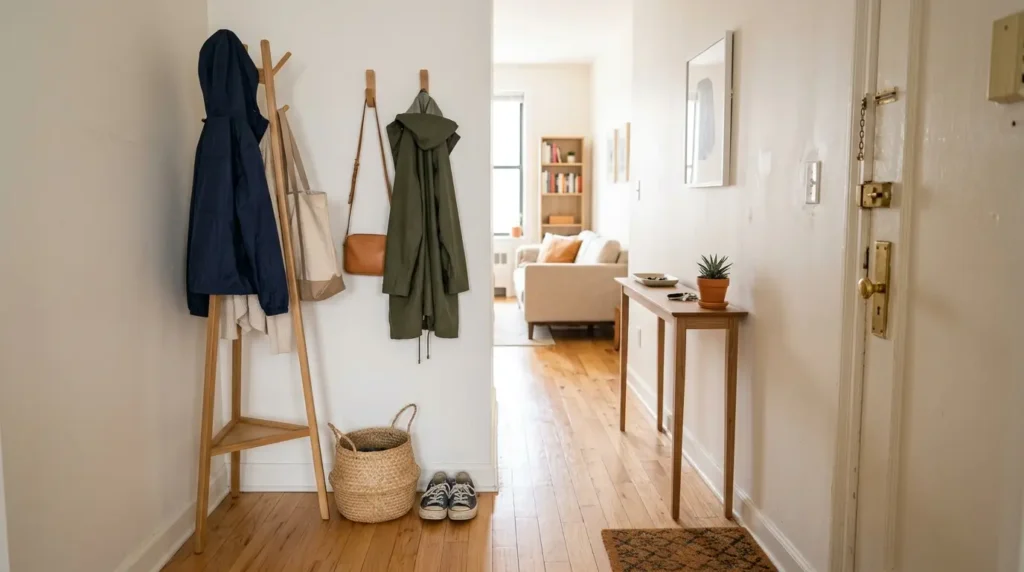
The items you reach for every single day, like a jacket, a bag, or keys, are the ones most likely to end up dropped on a chair because there is no dedicated spot near the door. A freestanding coat rack or a row of wall hooks solves this for exactly those daily-use pieces, functioning like a small clothing valet by the entry.
Place a coat rack near the entry or bed, and use it only for items worn that day or week, not as overflow storage for your whole closet. If you would rather mount to the wall, a row of hooks at staggered heights holds more in the same width and adds a decorative element.
A standard coat rack needs a floor footprint of about 16 to 20 inches in diameter, so check that against your entry space before buying. For wall hooks, measure the wall run and plan one hook every 4 to 6 inches so items do not overlap and crush each other.
A freestanding rack needs no installation at all. Wall hooks come in both screw-in and adhesive versions, so check your lease for drilling rules and pick the adhesive version if that is not allowed, matching the weight rating to what you plan to hang. Approximate cost runs from about $20 for a basic hook set to $90 or more for a sturdy coat rack, as a range to confirm.
Avoid hanging heavy winter coats on lightweight adhesive hooks, since most are rated for only a few pounds and will peel off under real weight. This benefits anyone who wants grab-and-go access to daily items, though it only suits a handful of pieces, not a full wardrobe.
11. Leaning Ladder Clothing Display
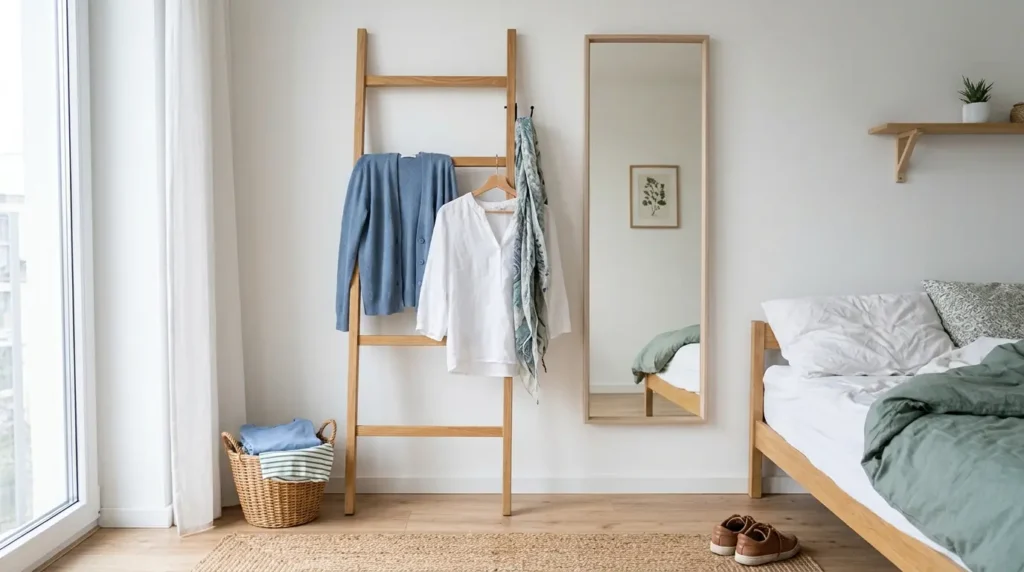
A tall, narrow gap of wall space, like beside a dresser or in a corner too small for furniture, often goes completely unused in a studio layout. A leaning ladder for clothes in a small space fills that exact gap with almost no floor footprint.
Lean a wooden or metal ladder against the wall at a slight angle, and drape folded blankets, scarves, or lightly worn outfits over each rung. Use the bottom rung or the floor space just in front of it for a small shoe tray, so the whole display stays organized rather than becoming a random pile.
Measure the wall height where you plan to lean it; most decorative ladders run 4 to 6 feet tall, and you want at least a foot of clearance at the top so it leans at a safe, stable angle rather than standing nearly vertical.
A leaning ladder rests against the wall by its own weight, so there is no drilling, though it is worth checking that the base will not slide on a hard or slick floor. Approximate cost runs from about $30 for a basic wooden ladder to $100 or more for a styled metal or oak-finish version, as a range to confirm.
Avoid draping heavy or bulky items like winter coats over the rungs, since too much weight on one rung can make the ladder tip forward. This benefits anyone who wants a decorative, low-footprint display for lightly worn pieces, though it works better for scarves, light layers, and blankets than for a full wardrobe.
12. Storage Headboard
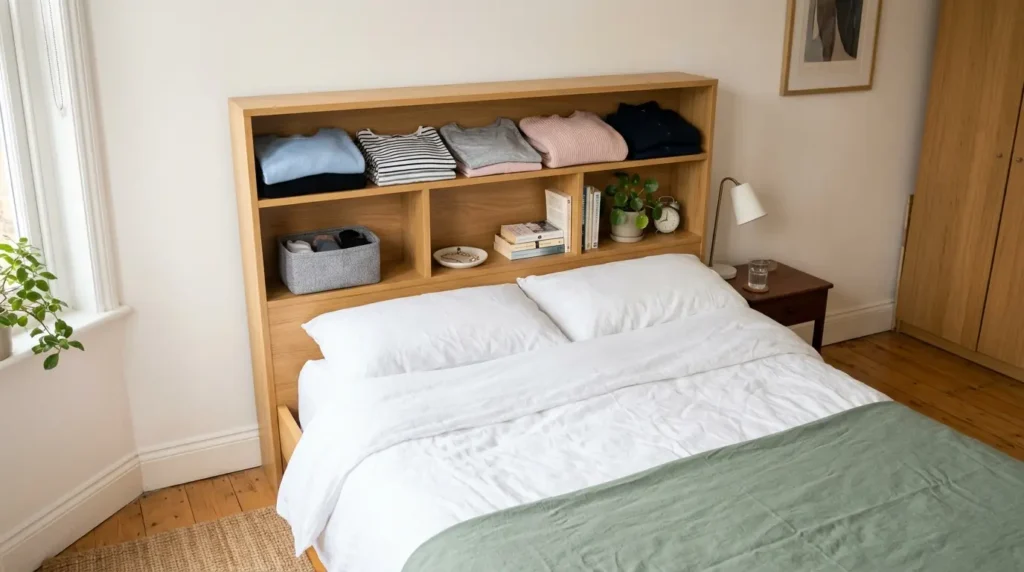
The wall behind the bed is prime real estate in most studios, yet a standard headboard uses it for nothing beyond leaning a pillow against. A storage headboard reclaims that space with built-in shelves or drawers right where your hand already lands each morning.
Choose an open-shelf headboard for items you want to grab on your way out the door, or a closed-drawer version for folded clothes you would rather keep hidden. Either way, keep the shelf closest to the pillow for lightweight daily items, since reaching across the bed for something heavy gets old fast.
Measure your bed’s width before buying, since headboards are sized to match standard mattress widths, and check the wall space above the bed for any outlets or switches the headboard might cover.
Most storage headboards attach to the bed frame rather than the wall, so they need no drilling, though a few wall-mounted versions do require anchors, so check the product listing before buying. Approximate cost runs from about $150 for a basic open-shelf headboard to $500 or more for a drawer-style version, as a range to confirm.
Avoid overloading open headboard shelves with heavy books or decor, since most are rated for light to moderate weight, not a stacked library. This benefits anyone replacing a headboard anyway, though storage capacity is modest, so it works best for small daily items rather than a full wardrobe.
13. Labeled Bins and Baskets for Folded Clothes
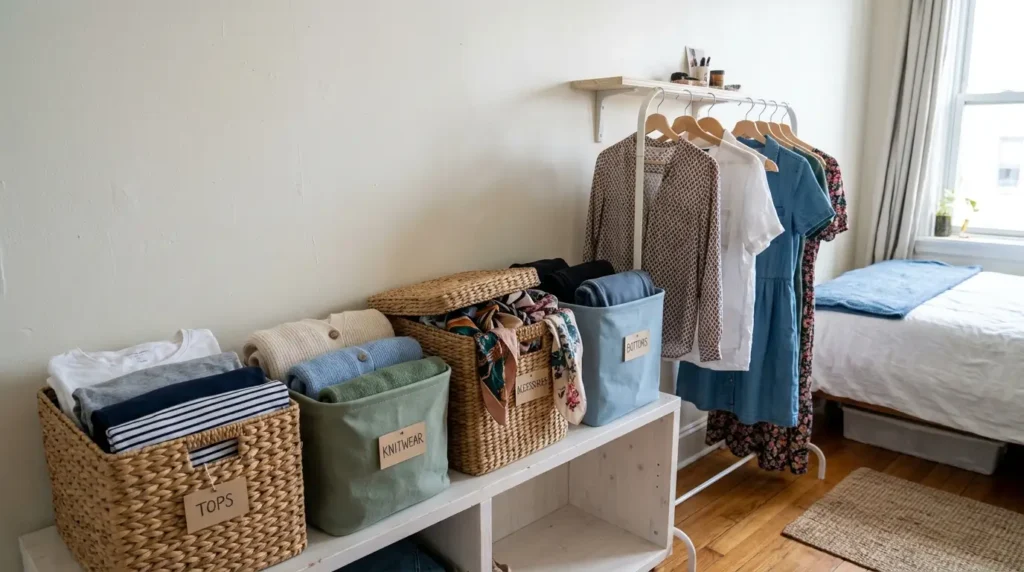
Folded clothes without a drawer or shelf system tend to end up in loose, unlabeled piles, which makes even simple small-space clothing organization feel harder than it should. Labeled bins and baskets give every category of folded item its own spot, wherever you have a few inches of shelf, floor, or closet-alternative space to spare.
Sort clothes by category, such as t-shirts, loungewear, and workout gear, and assign one bin or basket to each category. Use matching containers so the set reads as intentional storage rather than moving-day leftovers, and label each one, especially if the bins are opaque.
Measure the shelf, floor, or cabinet space you plan to use before buying a set, since bins sold in a uniform size rarely all fit the same space once stacked two or three high.
This is entirely freestanding, so there is nothing to install. Approximate cost runs from about $20 for a basic set of fabric bins to $70 or more for a matched set of woven baskets, as a range to confirm.
Avoid mixing too many bin sizes and shapes in one visible stack, since a mismatched set reads as clutter even when it is technically organized. This benefits anyone finishing off any of the other 12 ideas on this list, since bins and baskets are the detail that makes a wardrobe, shelf, or cabinet system actually easy to use day to day, though they do not solve hanging storage on their own.
What Not To Buy
- A wardrobe or storage bed sized without measuring your actual wall or room first
- Adhesive hooks or rails rated for a few pounds, used for coats or heavy bags
- A tension rod loaded past its stated weight rating
- Under-bed bins bought before checking your real bed clearance
- An over-the-door organizer for bulky shoes or sweaters it was not designed to hold
- A storage ottoman with a flimsy hinge you plan to open every day
- Mismatched bin sizes that will not stack or fit the shelf you have
Comparison Table
| Solution | Best for | Floor-space needed | Budget level | Concealment | Renter-friendly |
|---|---|---|---|---|---|
| Freestanding wardrobe or armoire | Full wardrobe, hanging and folded | High | Mid to high | Fully hidden | Yes, freestanding |
| Garment rack | Quick hanging setup | Medium | Low to mid | Open display | Yes, freestanding |
| Open wall-mounted system | A wall with no furniture room | Low | Low to mid | Open display | Depends on mount type |
| Curtain-covered corner closet | An unused corner | Low to medium | Low to mid | Fully hidden | Yes, tension-mounted |
| Storage bed | Maximizing an already-needed bed | None extra | Mid to high | Fully hidden | Yes, freestanding |
| Under-bed bins | A standard bed with clearance | None extra | Low | Fully hidden | Yes, freestanding |
| Storage ottoman or bench | Extra seating plus overflow | Low to medium | Low to mid | Fully hidden | Yes, freestanding |
| Over-the-door organizer | Small daily accessories | None | Low | Open display | Yes, no drilling |
| Repurposed cabinet or bookshelf | Using furniture you already own | None extra | Low | Hidden if doors close | Yes, freestanding |
| Coat rack and wall hooks | Daily grab-and-go items | Low | Low | Open display | Depends on hook type |
| Leaning ladder | A narrow, awkward gap | Very low | Low to mid | Open display | Yes, leans freely |
| Storage headboard | Replacing a headboard anyway | None extra | Mid to high | Open or hidden, depends on style | Mostly yes |
| Labeled bins and baskets | Finishing any other system | Varies | Low | Depends on container | Yes, freestanding |
Checklist
- Measure your floor and wall space before choosing any idea on this list
- Separate what needs to hang from what can be folded
- Identify your everyday essentials so they get the most accessible spot
- Check your lease for drilling and adhesive rules before buying anything wall-mounted
- Set a budget range before shopping, since prices vary widely by retailer
- Plan a spot for shoes, bags, and accessories, not just clothes
- Plan a spot for laundry in progress, not just clean, stored clothes
- Keep walking paths clear once everything is in place
- Plan for seasonal storage, since off-season items can move to the least accessible spot
How to Choose
Start with your floor space. A studio with almost no spare floor does best with the open wall-mounted system, the curtain-covered corner closet, over-the-door organizers, wall hooks, or a storage headboard, since none of these add furniture to the room. A studio with a few feet to spare can add a wardrobe, a garment rack, or a storage ottoman.
Next, consider how much you own. A minimal wardrobe fits comfortably on a garment rack, a few bins, and an over-the-door organizer. A fuller wardrobe, especially with bulky seasonal items, usually needs a wardrobe or storage bed as the anchor piece, with smaller ideas filling in the gaps.
Budget matters too. The lowest-cost combinations lean on what you likely already own, like a repurposed bookshelf, labeled bins, and wall hooks. Higher-budget setups can add a wardrobe or storage bed as a single larger purchase that solves most of the problem at once.
Check your lease before anything else if you are unsure about drilling. Every freestanding option on this list, including the wardrobe, garment rack, storage bed, under-bed bins, storage ottoman, and repurposed cabinet, needs no landlord approval at all.
Finally, decide how you feel about open storage. If visible clothes bother you, prioritize the wardrobe, storage bed, curtain-covered corner closet, under-bed bins, storage ottoman, or repurposed cabinet, all of which hide clothes from view. If you like displaying a curated wardrobe, the garment rack, open wall system, coat rack, or leaning ladder work as decor as much as storage.
Frequently Asked Questions
Conclusion
A studio apartment with no closet still has plenty of real storage hiding in plain sight, from the space under the bed to the wall beside the door. Pick one or two studio apartment ideas with no closet that match your floor space and budget, start with the renter check for each, and build outward from there instead of trying to install everything on this list at once. The right combination turns a pile of clothes on a chair into a system you actually use every day.
For more small-space storage, browse our Organization and Storage category.