

12 Studio Apartment Furniture Mistakes to Avoid in a Small Space
Studio apartment furniture mistakes are rarely about buying one obviously huge piece of furniture. More often, the problem is the combination of several small decisions that slowly make the apartment feel cramped, awkward, or harder to use.
A sofa that blocks the natural walkway. A bed that leaves no comfortable place to sit. A coffee table that looks beautiful in a showroom but becomes an obstacle every time you walk across the room. Even choosing furniture that is technically the right size can create problems if every piece sits at the same visual height.
The challenge with a studio is that every piece has to earn its space. Your living room is also part of your bedroom, your dining area may double as your workspace, and the same walkway may need to connect the entrance, kitchen, bathroom, and sleeping area.
Here are 12 specific furniture mistakes worth checking before you buy anything else for your studio.
1. Pushing Every Piece Against the Wall
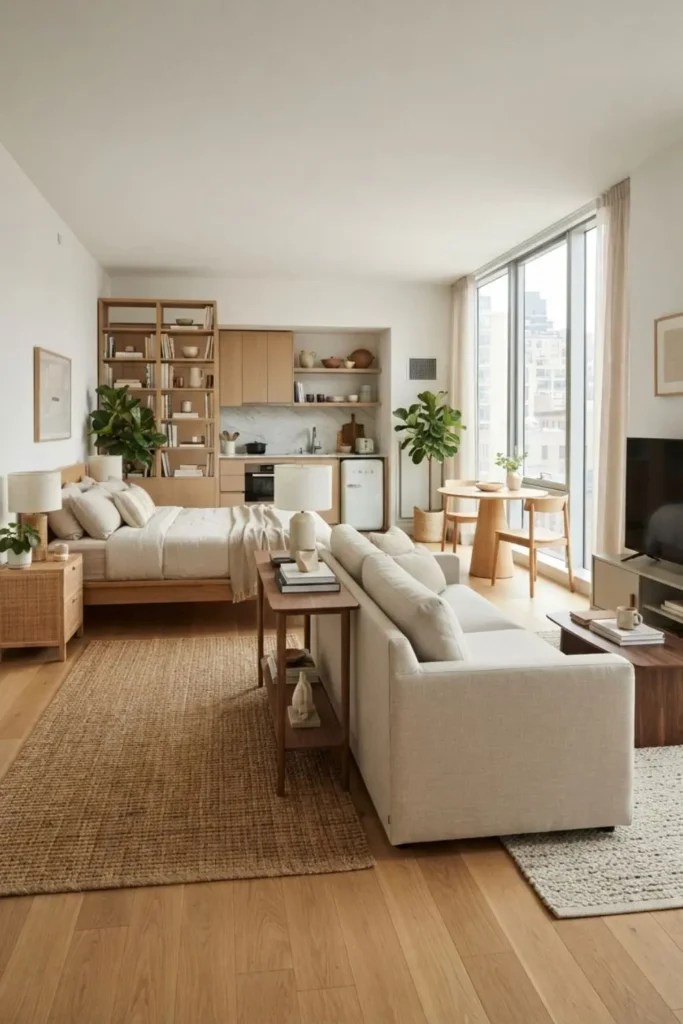
It seems logical that pushing furniture against the walls will create more open floor space. In a studio, however, this can produce the opposite effect.
When the sofa, bed, desk, dining table, and shelving are all lined around the perimeter, the centre of the apartment becomes an oversized empty patch while the edges become visually heavy. More importantly, you lose the opportunity to create separate zones.
A sofa can sometimes work better slightly away from the wall, particularly when its back helps define the boundary between the living and sleeping areas. Even a narrow console behind it can make the room feel intentionally divided rather than like one large room filled with furniture around the edges.
If you are still figuring out where everything should sit, these studio apartment layout ideas walk through ten proven arrangements for exactly this problem.
2. Buying a Sofa by Width Alone
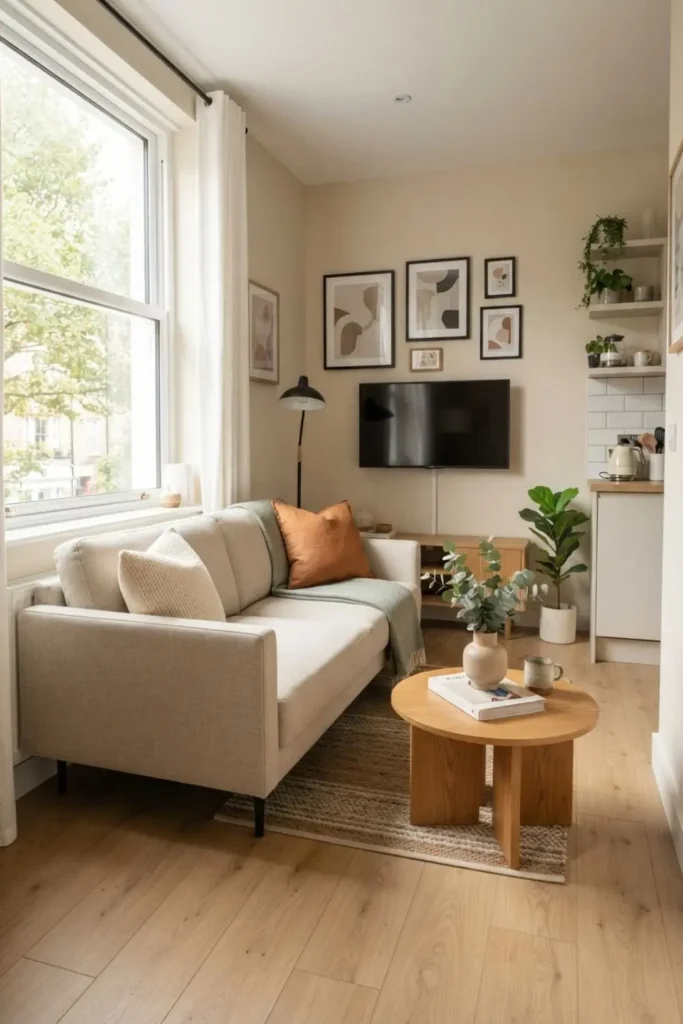
A sofa can technically fit along a wall and still be completely wrong for the room. Width is only one measurement that matters. Depth can be the real problem. A 90-inch sofa that is relatively narrow may work better than a 75-inch sofa with an unusually deep seat that projects far into the main walkway.
Pay attention to the sofa’s total depth, arm thickness, back height, and clearance around it. In a studio, a few extra inches of depth can affect everything in front of the sofa, including the coffee table and the route between the kitchen and bathroom.
Before buying, mark the sofa’s footprint on the floor with painter’s tape. Then actually walk around it. Sit where you expect to sit. Open nearby cabinet doors. Pull out dining chairs. This simple test can reveal a problem that a furniture website’s dimensions won’t show you.
3. Using a Standard Bed Frame When Storage Is Needed
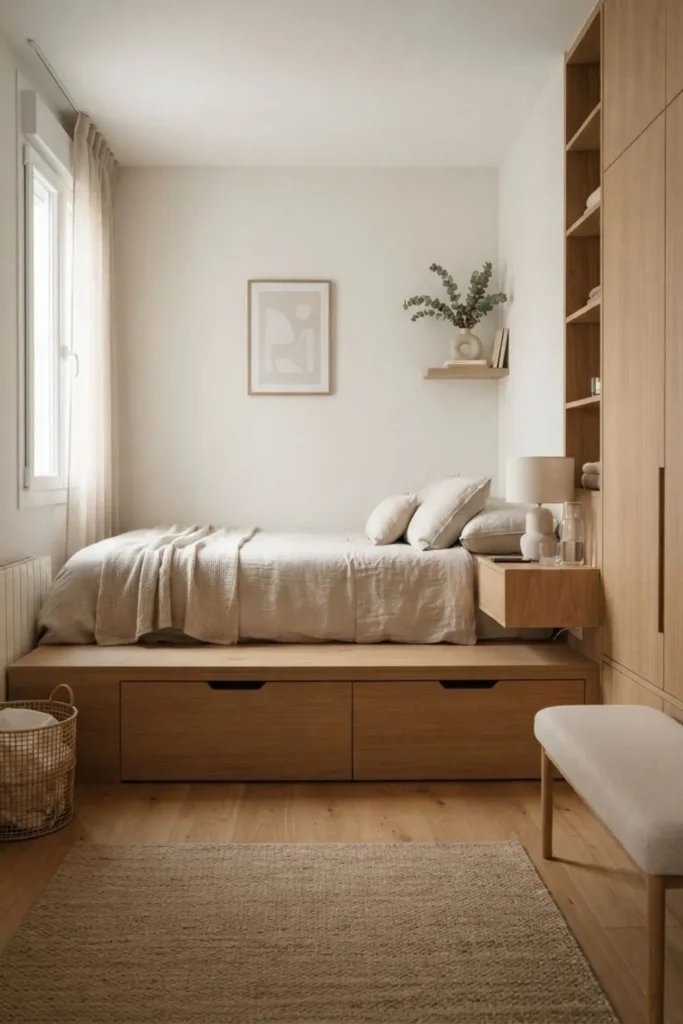
A traditional bed frame may look perfectly normal, but in a studio it can represent a major missed opportunity. The footprint underneath the bed is already occupied. If that space is completely inaccessible, you’re giving up a large potential storage zone while trying to fit wardrobes, cabinets, and shelving elsewhere.
This doesn’t mean every studio needs a bulky hydraulic storage bed. A simple platform bed with accessible under-bed drawers or enough clearance for attractive storage boxes can be much more useful. The key is accessibility. If you have to move three pieces of furniture before reaching the storage underneath, you probably won’t use it regularly.
Choose storage based on what you actually need to store. Seasonal bedding, luggage, shoes, and rarely used clothing are ideal candidates for under-bed storage because they don’t need to be accessed every day.
Pro Tip : Measure Your Storage Before Buying the Bed
Make a quick list of the items you want to store underneath. Then measure their combined footprint. This prevents you from buying a storage bed with impressive drawers that don’t actually accommodate your belongings.
4. Choosing a Coffee Table That Blocks the Main Route
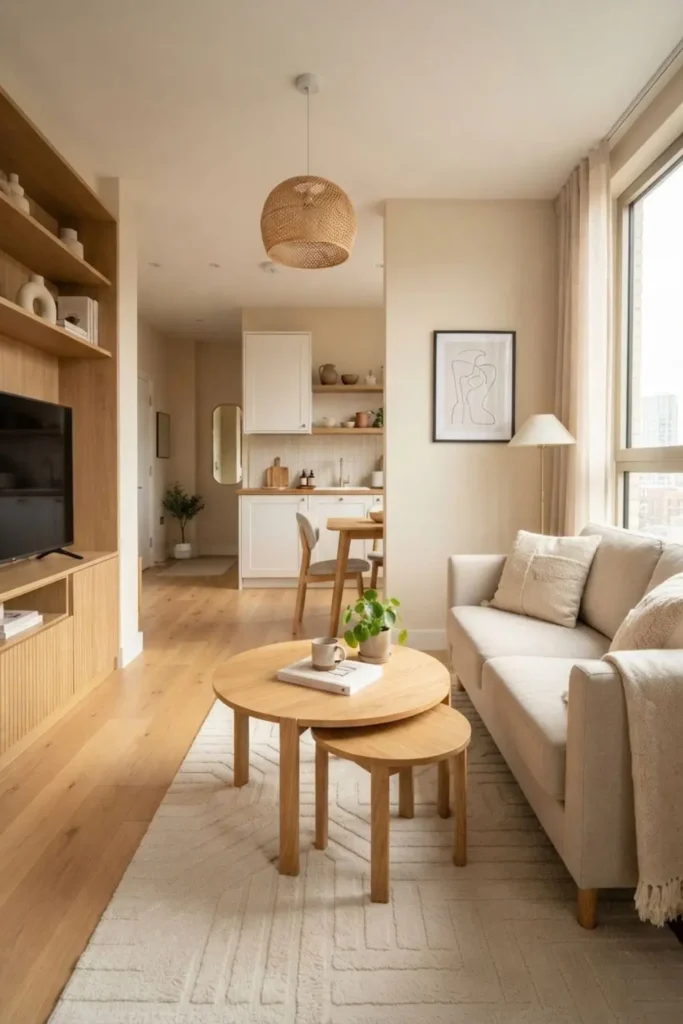
A coffee table doesn’t just occupy the space in front of a sofa. In a studio, it can become part of your main circulation path. If you have to walk around the coffee table every time you move from the entrance to the kitchen, it is probably too large or positioned incorrectly.
This is why a smaller round table can sometimes work better than a large rectangular one. Rounded edges make movement around the table easier, particularly when the living area sits directly beside a walkway.
Nesting tables are another useful option because you can separate them when needed and stack them when you want more floor space. An upholstered ottoman can also serve as seating, a footrest, and a temporary table when paired with a tray.
The goal isn’t simply to find the smallest coffee table possible. It’s to find one that doesn’t compete with the movement patterns of the apartment.
5. Buying Dining Chairs That Cannot Be Fully Pushed In

This is one of those problems you may not notice until you’ve lived with the furniture. A dining table may be the correct size, but chairs with wide backs, arms, or unusual legs can prevent them from sliding completely underneath. Suddenly your dining area requires another 12 to 18 inches of permanent floor space.
In a studio, that difference matters.
Before buying dining chairs, look at the entire footprint rather than just the chair dimensions. Armless chairs with narrow frames are often easier to tuck away. Backless stools can work particularly well at a counter or peninsula because they disappear almost completely when not being used.
If you work from your dining table, also consider whether the chair can comfortably serve both purposes. One well-chosen chair is better than having separate dining and office seating competing for the same floor area.
6. Buying Furniture With Too Many Open Shelves

Open shelving is attractive in photographs because it makes a room look airy and styled. In everyday studio living, too much of it can become visual noise. When every wall contains books, baskets, plants, decorative objects, kitchenware, and personal belongings, the apartment starts to feel busy even when the floor itself is tidy.
The problem isn’t open shelving itself. It’s using it as the primary storage solution for everything. A better furniture mix usually includes some closed storage. A low cabinet with doors can hide electronics, paperwork, cleaning supplies, and miscellaneous items that don’t contribute to the visual style of the room. Keep open shelving for the things you actually want to see.
A better furniture mix usually includes some closed storage. A low cabinet with doors can hide electronics, paperwork, cleaning supplies, and miscellaneous items that don’t contribute to the visual style of the room. Keep open shelving for the things you actually want to see, and pair it with a solid studio apartment organization system so the shelves you do leave open stay looking intentional rather than cluttered.
7. Choosing Furniture All at the Same Height

This is a surprisingly common design mistake. When the sofa back, TV console, sideboard, desk, shelving, and bed headboard all sit at roughly the same height, the room can develop a visual horizontal line that makes it feel smaller.
Studios benefit from variation. A low sofa beside a taller plant, a medium-height sideboard beneath wall art, or a slim tall bookshelf positioned away from the lowest furniture creates vertical rhythm.
This doesn’t mean you should fill every available vertical inch. The objective is controlled variation rather than a collection of unrelated heights. Look at the room from the entrance. If everything forms one continuous band around the apartment, introduce one or two pieces with a different visual height.
8. Buying a Desk That Is Too Deep
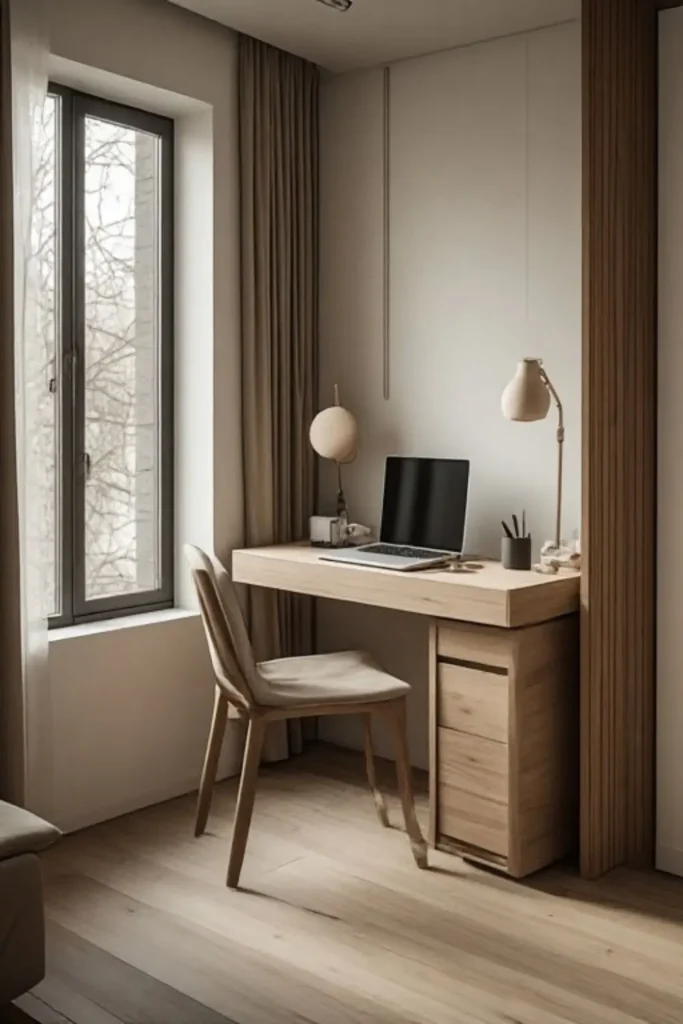
A home office doesn’t need to consume half the room. Many standard desks are designed for larger bedrooms or dedicated offices. In a studio, a deep desktop can project surprisingly far into the room and make the entire workspace feel like a permanent obstruction.
Before choosing a desk, decide what actually needs to live on it. If you use a laptop, you may not need a 30-inch-deep desktop. A slim wall-facing desk, console-style desk, or narrow writing desk can provide enough working space while preserving circulation.
If you use a monitor, measure the monitor stand, keyboard, and comfortable viewing distance rather than buying based on a generic desk size. A desk that is slightly narrower but carefully matched to your equipment can make the whole apartment easier to navigate.
9. Using a Large TV Console Instead of Mounting or Downsizing
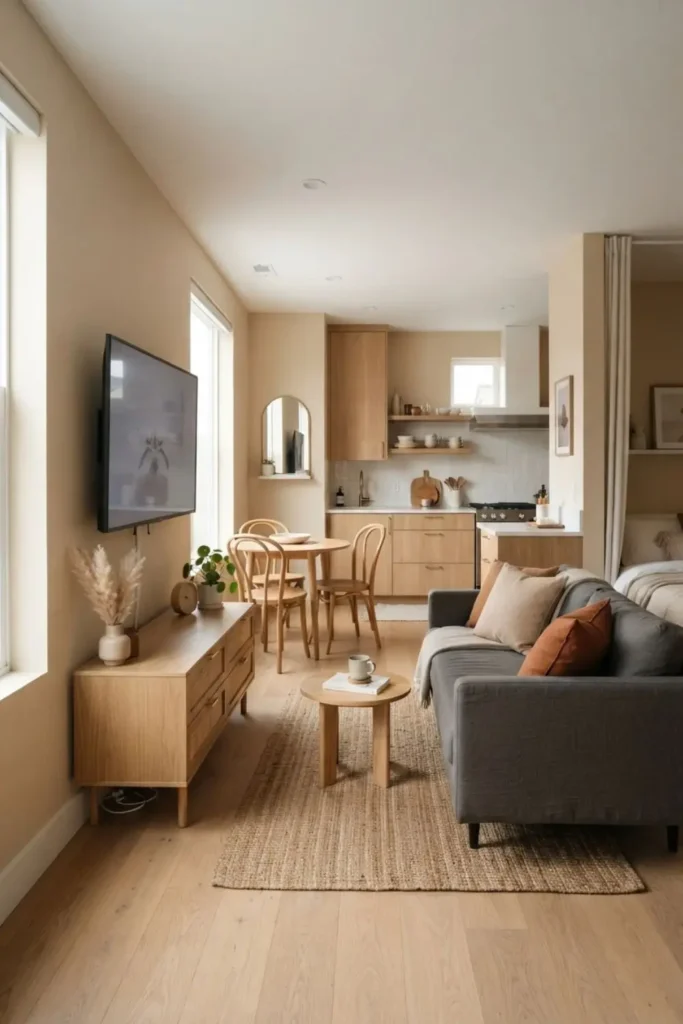
The television itself may not be the biggest problem. The furniture underneath it often is. A long entertainment console can consume an entire wall even when the TV only occupies a fraction of it. In a studio, that creates a large visual block and removes valuable storage or floor space.
If wall mounting is appropriate for your rental and circumstances, it can eliminate the need for a large TV unit altogether. If mounting isn’t an option, choose a compact media console that is only slightly wider than the screen.
Another option is a low storage cabinet that serves as both media furniture and general storage. The important thing is to avoid buying an entertainment centre designed for a much larger living room.
Pro Tip : Size the Console Around the Screen
Don’t start with the furniture. Start with your television and the wall. Measure the screen, available wall width, and viewing distance, then choose the smallest console that provides the storage and stability you actually need.
10. Choosing a Bed and Sofa That Compete for the Same Space
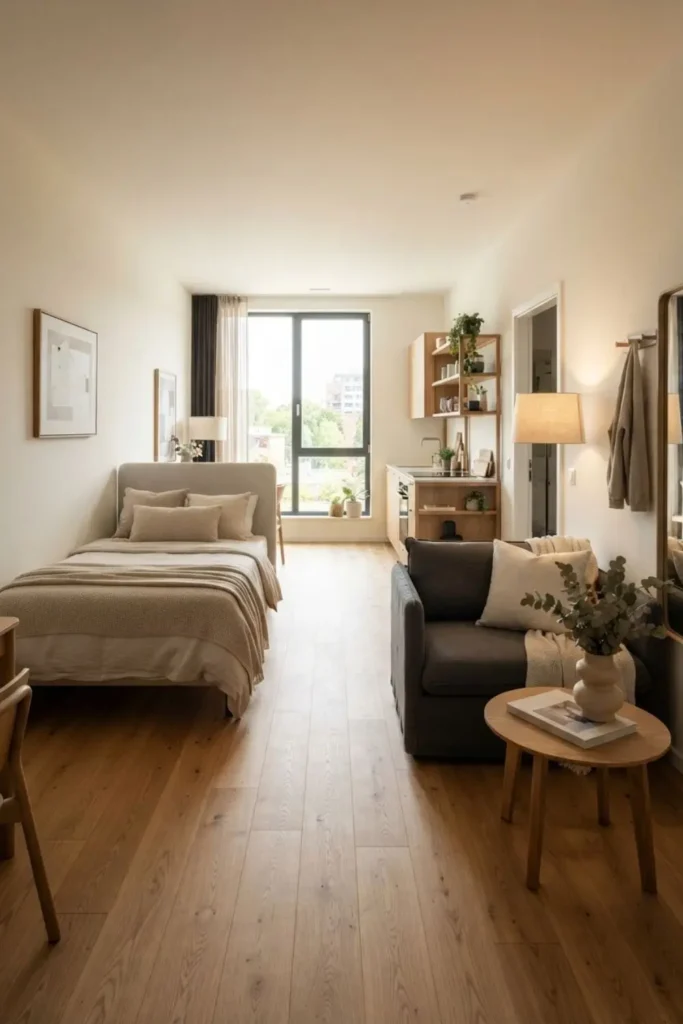
This is where studio layouts become genuinely difficult. The important thing is to avoid buying an entertainment centre designed for a much larger living room. If the bed and sofa are both large, neither has enough room to breathe. The sofa may sit too close to the bed, while the bed leaves insufficient space for a comfortable living area.
The solution isn’t necessarily a sofa bed. Sometimes the better approach is to choose a narrower sofa and position the bed along the opposite wall, or use a compact loveseat with a properly sized bed. Consider the two pieces together, not independently.
The bed is usually the largest fixed item in a studio, so it should establish the layout first. Once its footprint and circulation are clear, select living-room furniture around the remaining usable area. The bed is usually the largest fixed item in a studio, so it should establish the layout first. Once its footprint and circulation are clear, select living-room furniture around the remaining usable area. If privacy between the sleeping and living areas is the bigger concern, a renter-friendly room divider can separate the two zones without needing extra square footage to do it.
11. Buying Furniture That Only Has One Function
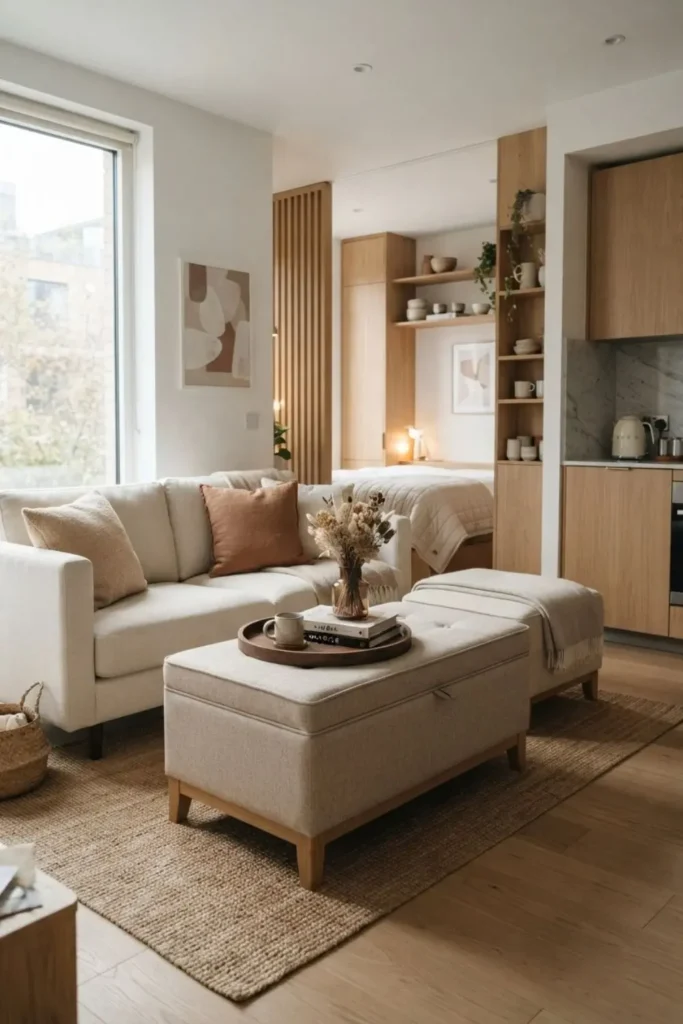
In a larger apartment, a side table can simply be a side table. In a studio, furniture that performs only one job has to justify the floor space it occupies. This doesn’t mean every item needs to transform into something else. It means you should look for natural opportunities to combine functions.
A storage ottoman can provide seating, foot support, and hidden storage. A narrow console can work as an entry table and occasional desk. A dining table can become a workstation during the day. A bench can provide seating while hiding shoes or blankets underneath.
The best multifunctional furniture doesn’t look like a compromise. It should look like normal furniture that happens to be useful in several ways.
12. Filling the Apartment With Furniture Before Living in It
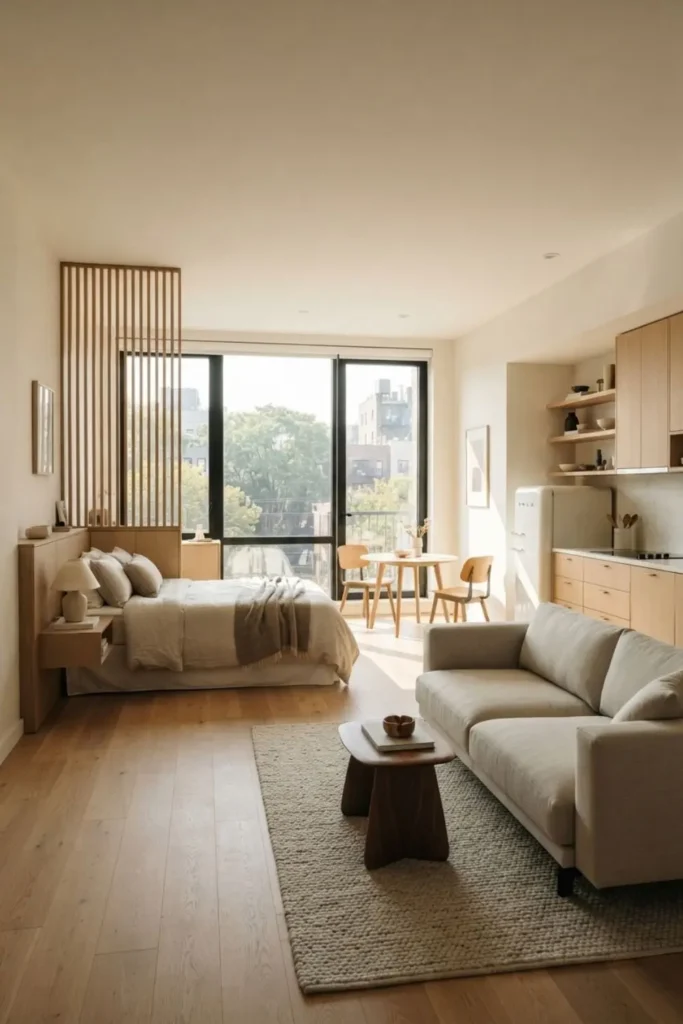
This may be the most expensive mistake because it often happens before you understand how the apartment actually works. You move in with a bed, sofa, dining table, desk, coffee table, side tables, bookcase, TV console, and several storage pieces because each item looks useful on its own.
Then you discover there is nowhere comfortable to walk. A studio needs some empty space. Not wasted space, but breathing room. Start with the essential furniture: bed, sofa or seating, one primary storage solution, and whatever you genuinely need for eating or working. Live with the arrangement for a couple of weeks before filling every remaining corner.
You may discover that the side table isn’t necessary, the dining table doubles perfectly as a desk, or the bookshelf is taking up space that would be better used for closed storage. Furniture should respond to how you live rather than forcing you to live around the furniture.
Pro Tip : Live With Empty Corners
Don’t treat every empty corner as a problem to solve. Leave some areas intentionally open until you know what you actually need. In a studio, negative space is part of the design.
How to Avoid Studio Apartment Furniture Mistakes Before You Buy
The easiest way to prevent most studio apartment furniture mistakes is to stop shopping by appearance alone. Measure the room first. Draw the main walking routes. Mark proposed furniture footprints on the floor with painter’s tape. Check door swings, cabinet access, window locations, outlets, and the distance between major pieces.
Then ask one simple question about every item: What does this piece need to accomplish? If the answer is “it looks nice,” that’s not necessarily a reason to reject it. But in a studio, the piece needs to look nice without interfering with something more important.
Think in terms of zones rather than rooms. Your living zone doesn’t need four walls around it. A sofa, rug, lighting arrangement, and small table can establish it. Your bedroom doesn’t necessarily need a separate room. The position of the bed, a slim divider, or a change in lighting can create enough separation. Most importantly, don’t try to make your studio look like a smaller version of a three-bedroom home. Choose furniture based on the way a compact home actually functions.
Conclusion
Avoiding studio apartment furniture mistakes isn’t about owning less furniture just for the sake of minimalism. It’s about making every piece work with the limited space you have. The biggest improvements often come from details: choosing sofa depth instead of looking only at width, leaving enough clearance around a coffee table, using closed storage alongside open shelving, giving the bed enough breathing room, and resisting the temptation to fill every empty corner.
Before your next furniture purchase, measure the footprint, think about circulation, and consider whether the piece solves a real problem. A studio that has fewer but better-chosen pieces will usually feel more comfortable than one packed with furniture that looked perfect individually.

